
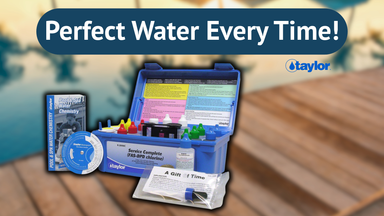
How to Use the Taylor K-2006C Pool Test Kit
Published by Anna Belmonte on 12/17/2025
Posted in: Pool Chemistry
A Step-by-Step Guide to Accurate Pool Water Testing
If you’ve never used a Taylor test kit before, it can look a little intimidating at first. All those bottles, colors, and charts. But once you understand the process, testing your pool water is straightforward, fast, and incredibly reliable.
In this guide, we’ll walk you step-by-step through how to use the Taylor K-2006C Pool Test Kit so you can confidently test your pool’s chemistry anytime.
Using the Taylor K-2006C allows you to test your water with professional-level accuracy, the same way pool pros do.
First Things First: What All Those Colors Mean
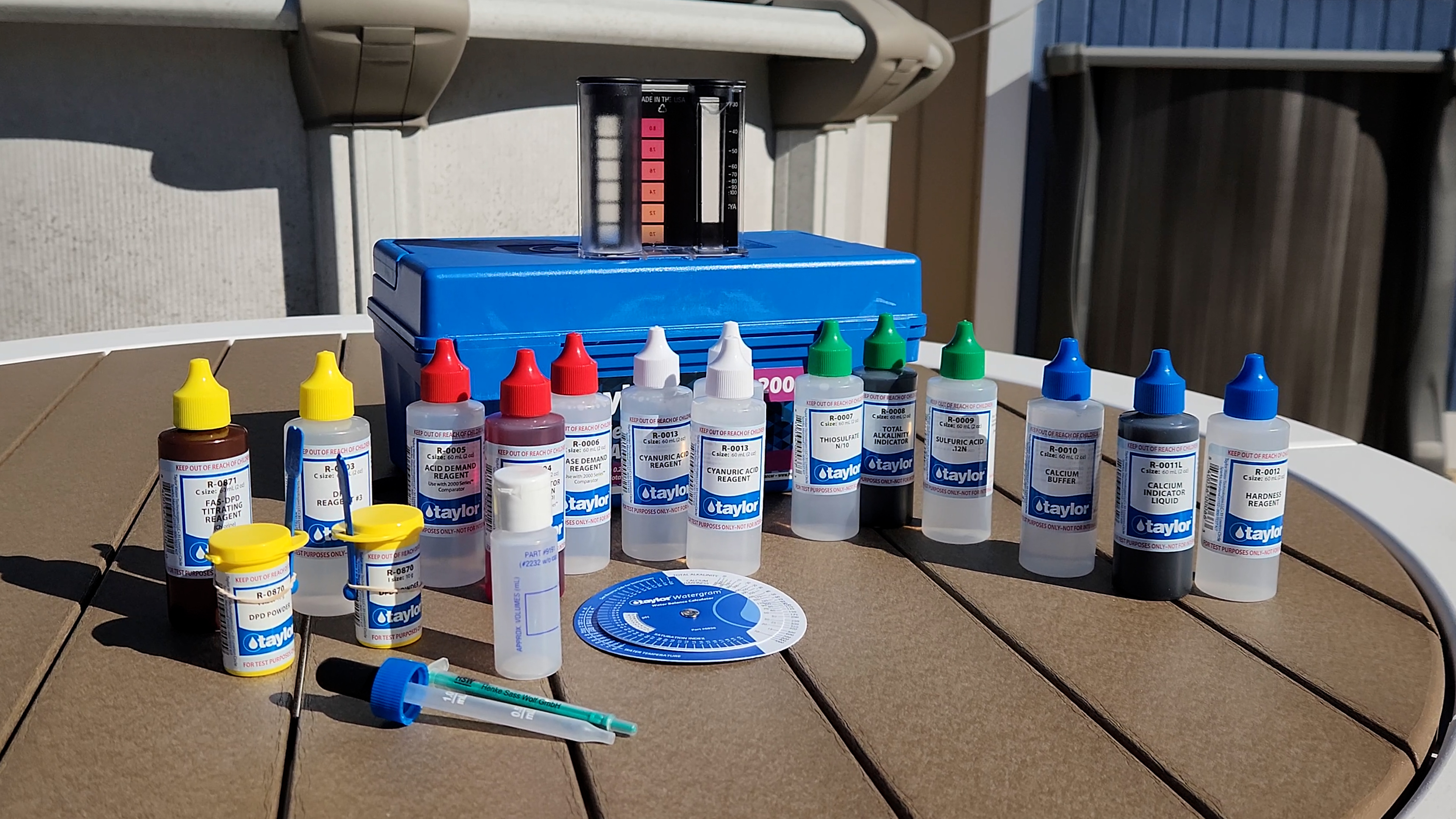
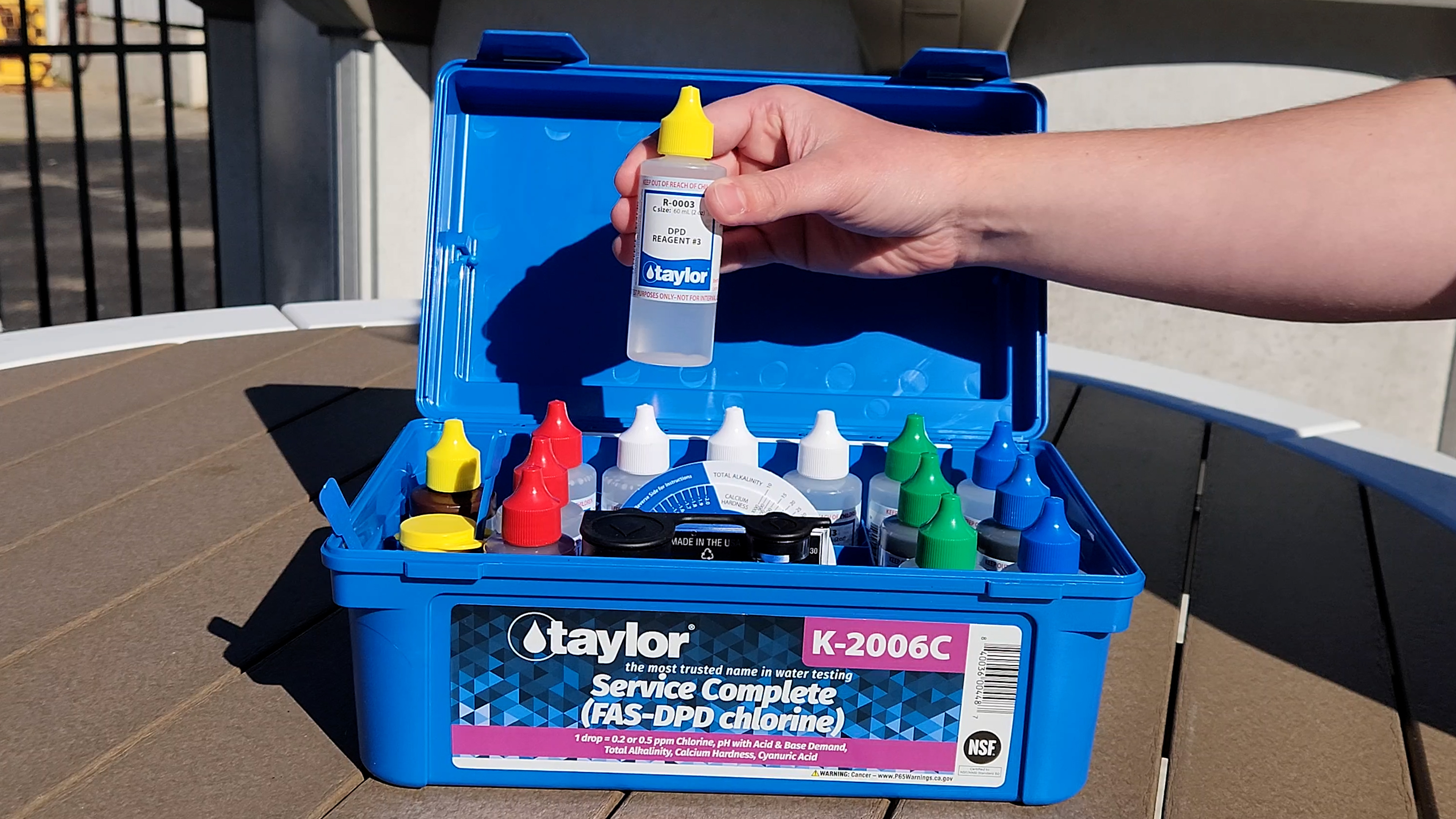
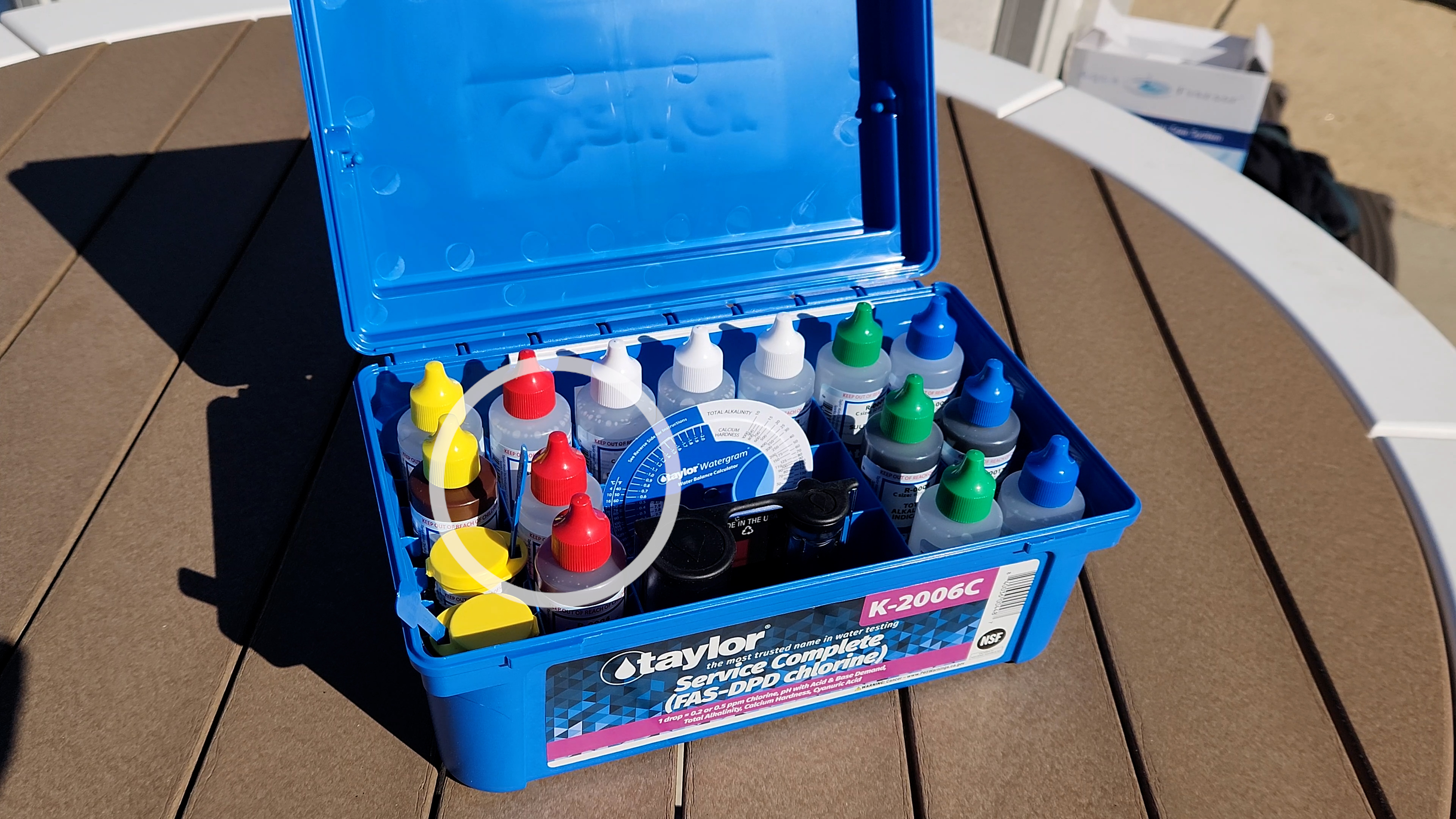
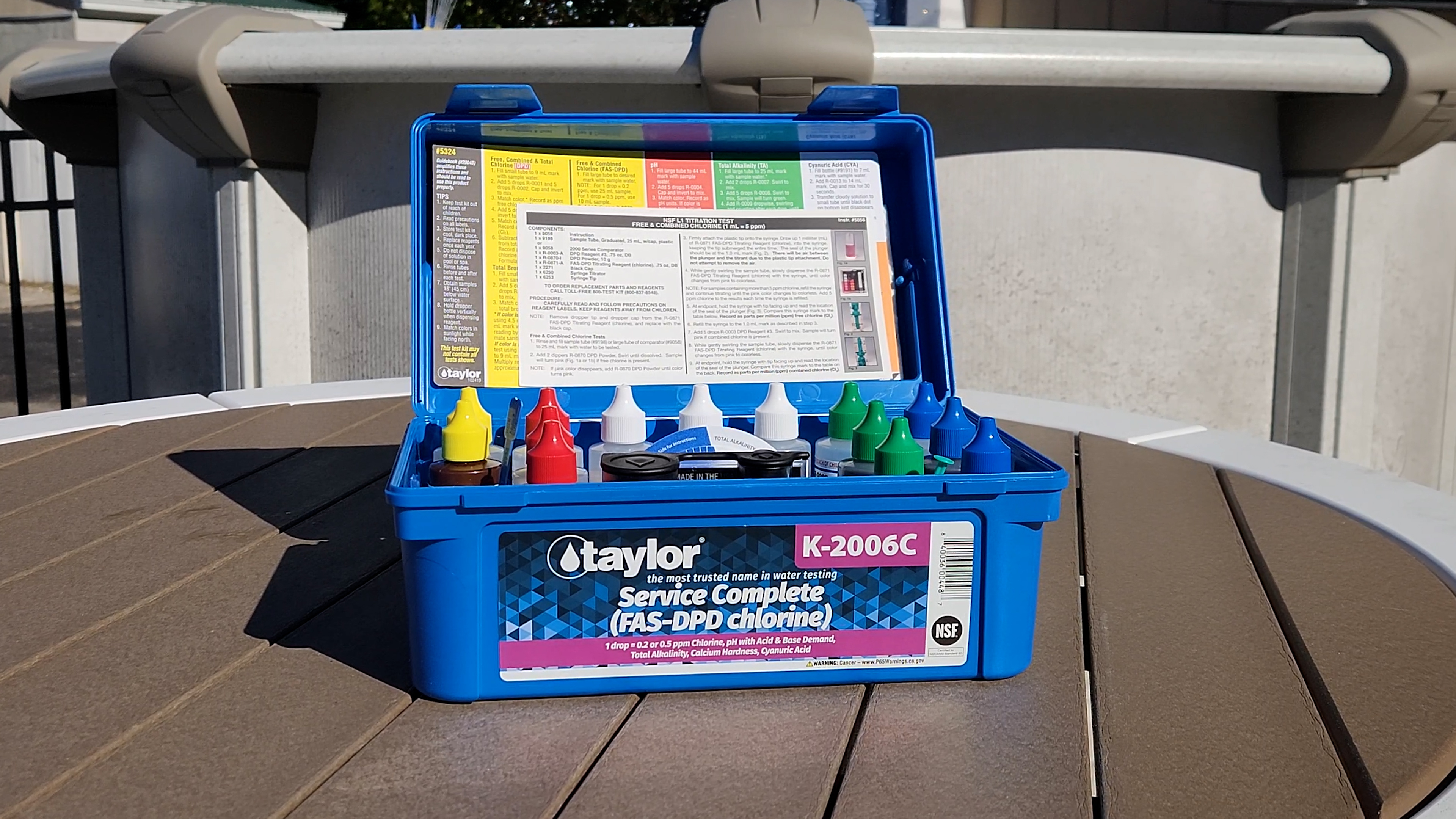
The color of the caps is your built-in cheat sheet.
Taylor organizes the reagents by test, so once you know the colors, everything gets much easier.
- Yellow caps = Chlorine
These reagents are used to test Free Chlorine and Total Chlorine. - Red caps = pH
Anything with a red cap is part of the pH test or pH adjustment steps. - Green caps = Total Alkalinity
These help measure alkalinity, which keeps your pH stable. - Blue caps = Calcium Hardness
Used to test how much calcium is in the water. - White caps = Cyanuric Acid (Stabilizer)
These are for measuring stabilizers in outdoor pools.
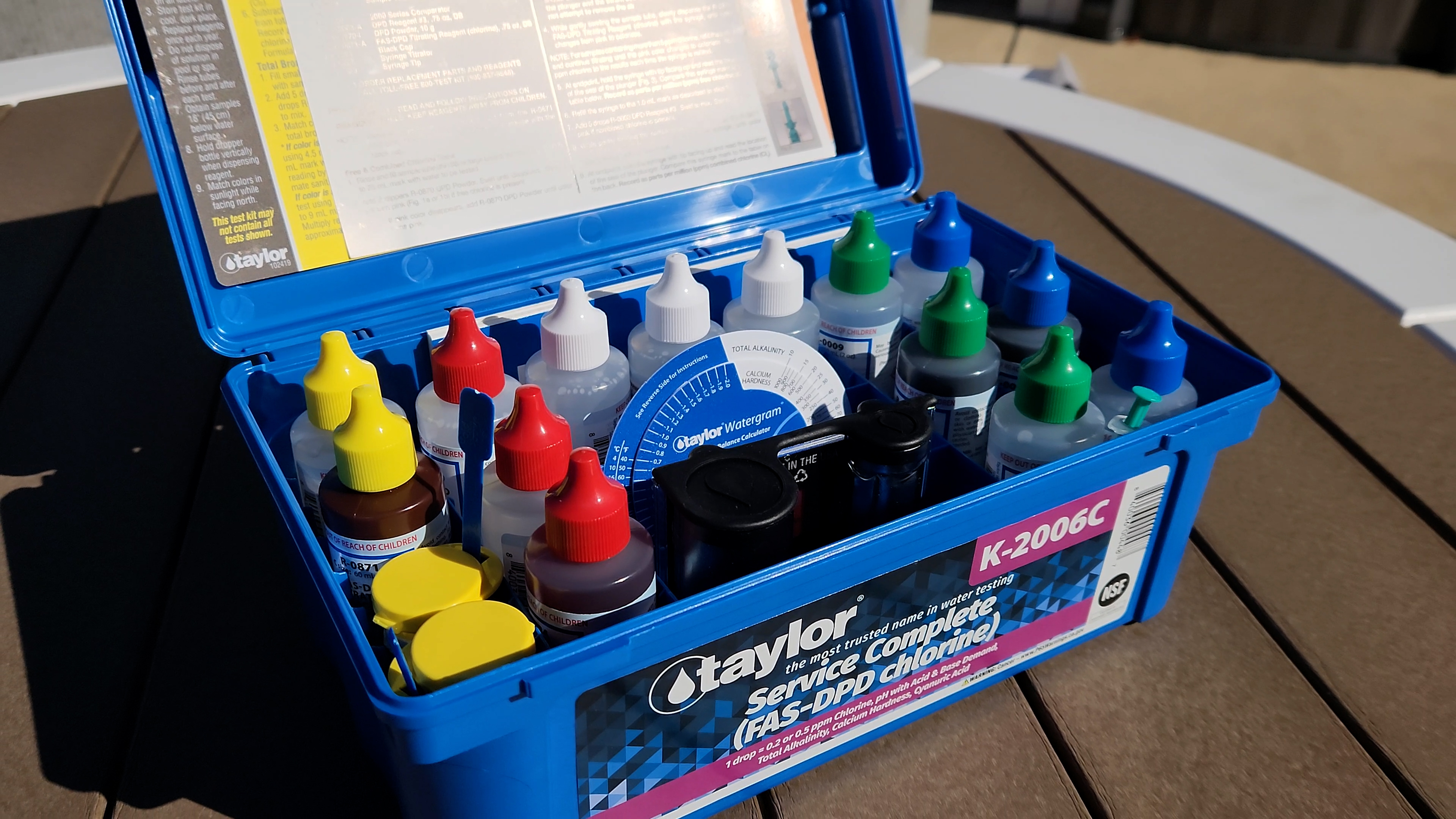
You’re only working with a few bottles at a time, and the steps always follow the same rhythm: fill, add drops, swirl, count, and read.
Let’s get into it!
Free Chlorine (FC)
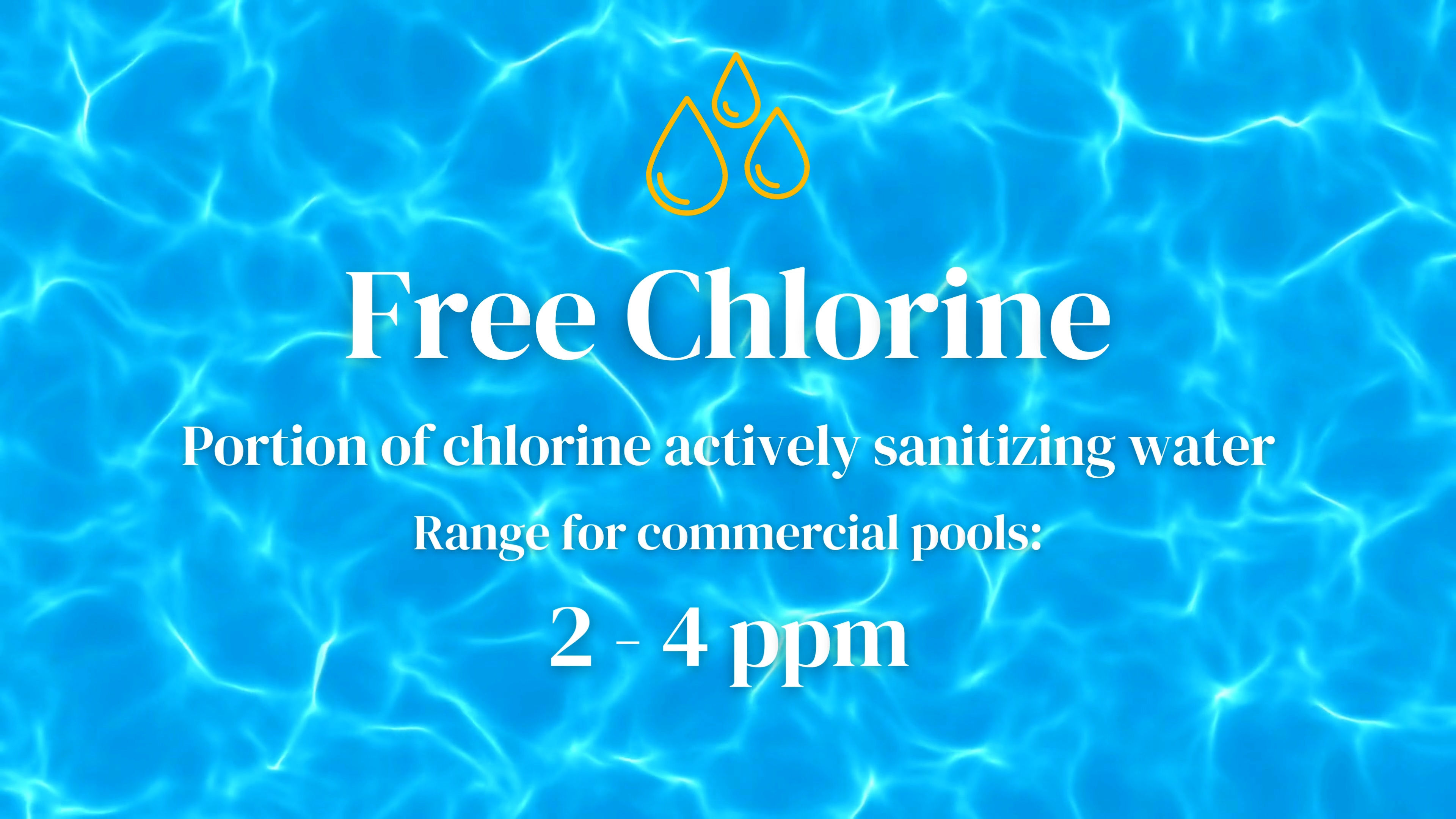
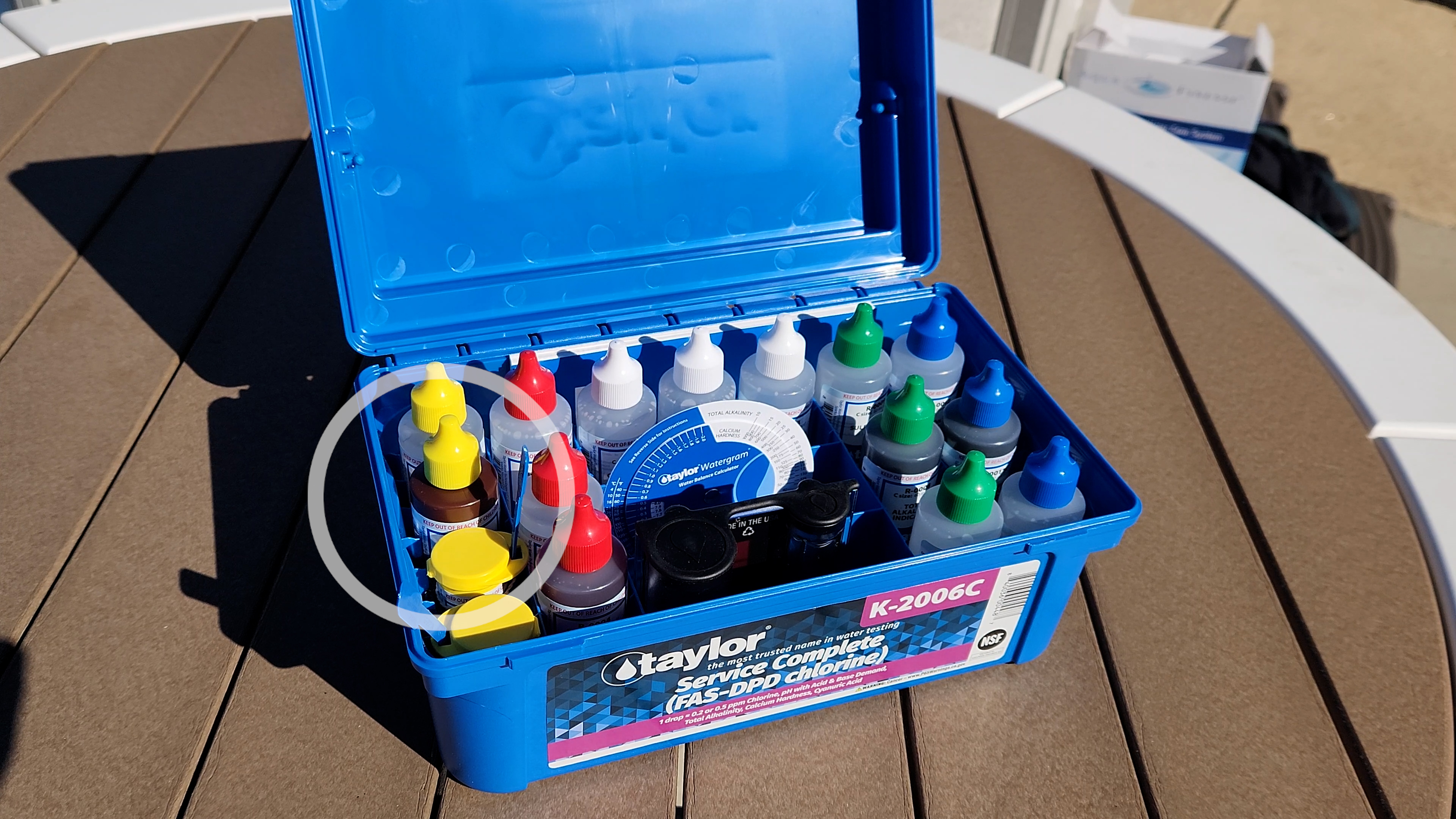
Free Chlorine is the portion of chlorine that is actively sanitizing and oxidizing contaminants in your pool.
Recommended Free Chlorine Range (Commercial Pools):
2–4 ppm (always follow local health codes)
Maintaining proper Free Chlorine levels ensures effective disinfection without causing eye or skin irritation.
Reagents used: Yellow caps
How to Test Free Chlorine
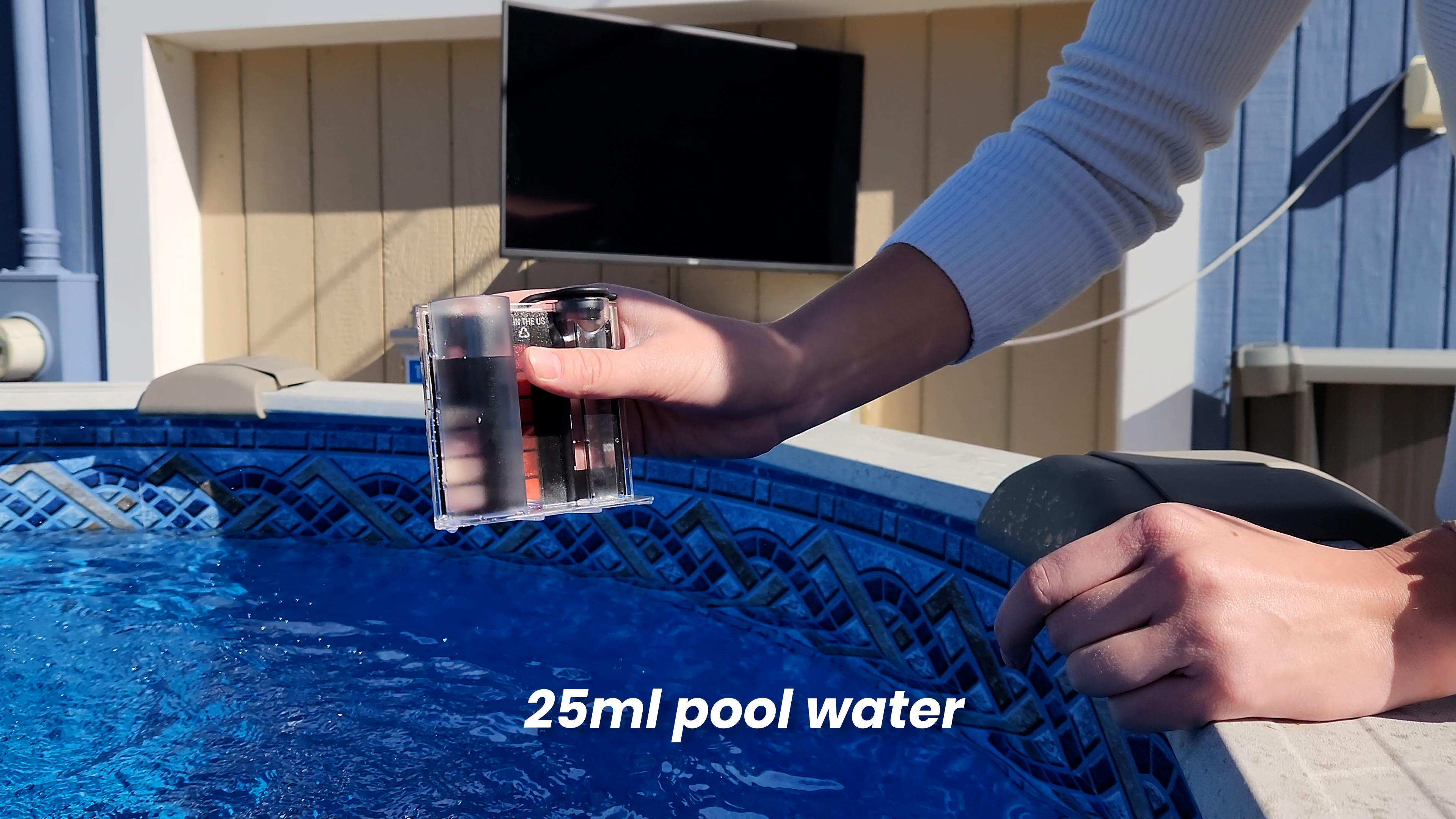
- Fill the test tube to 25 mL with pool water
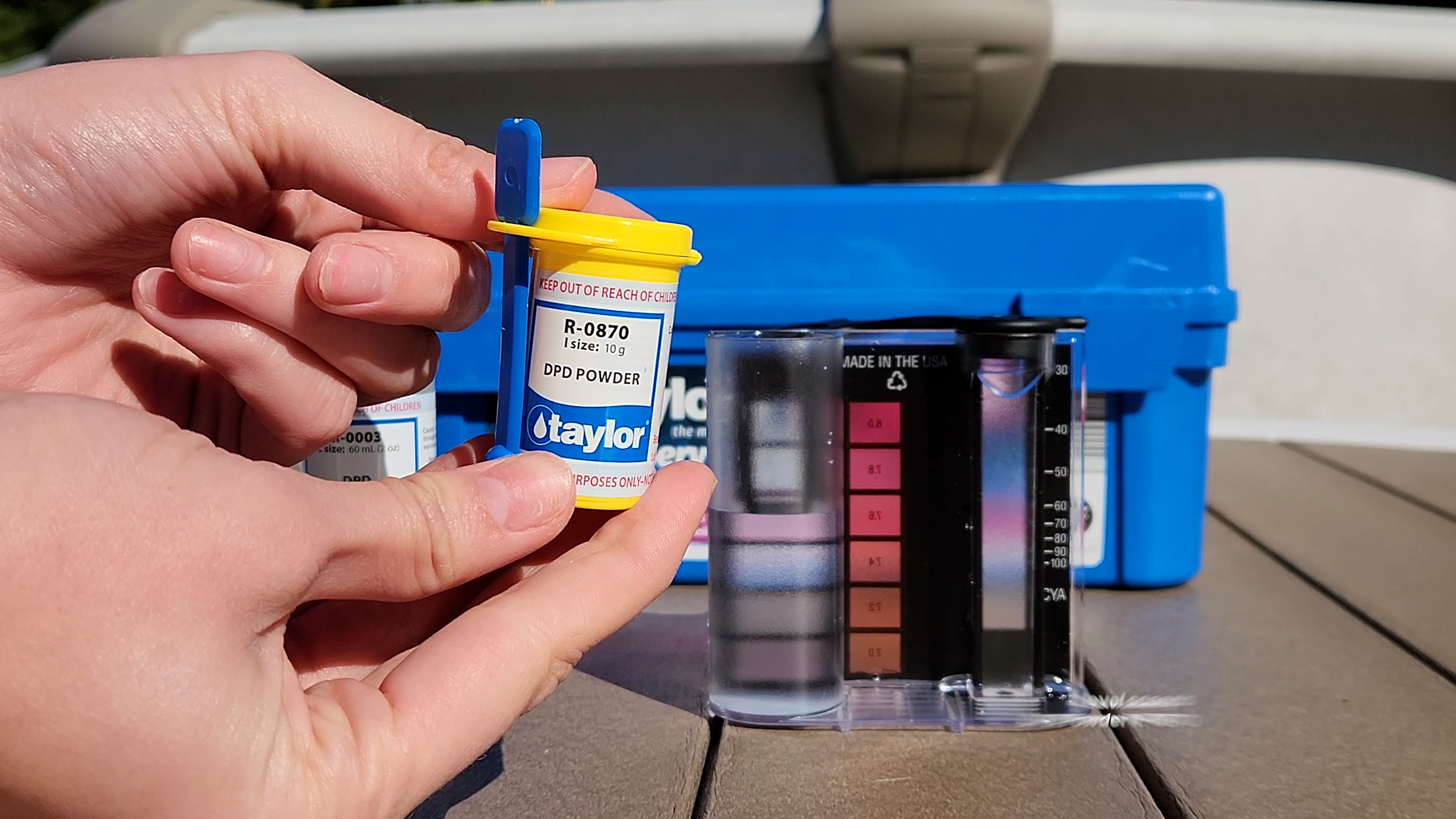
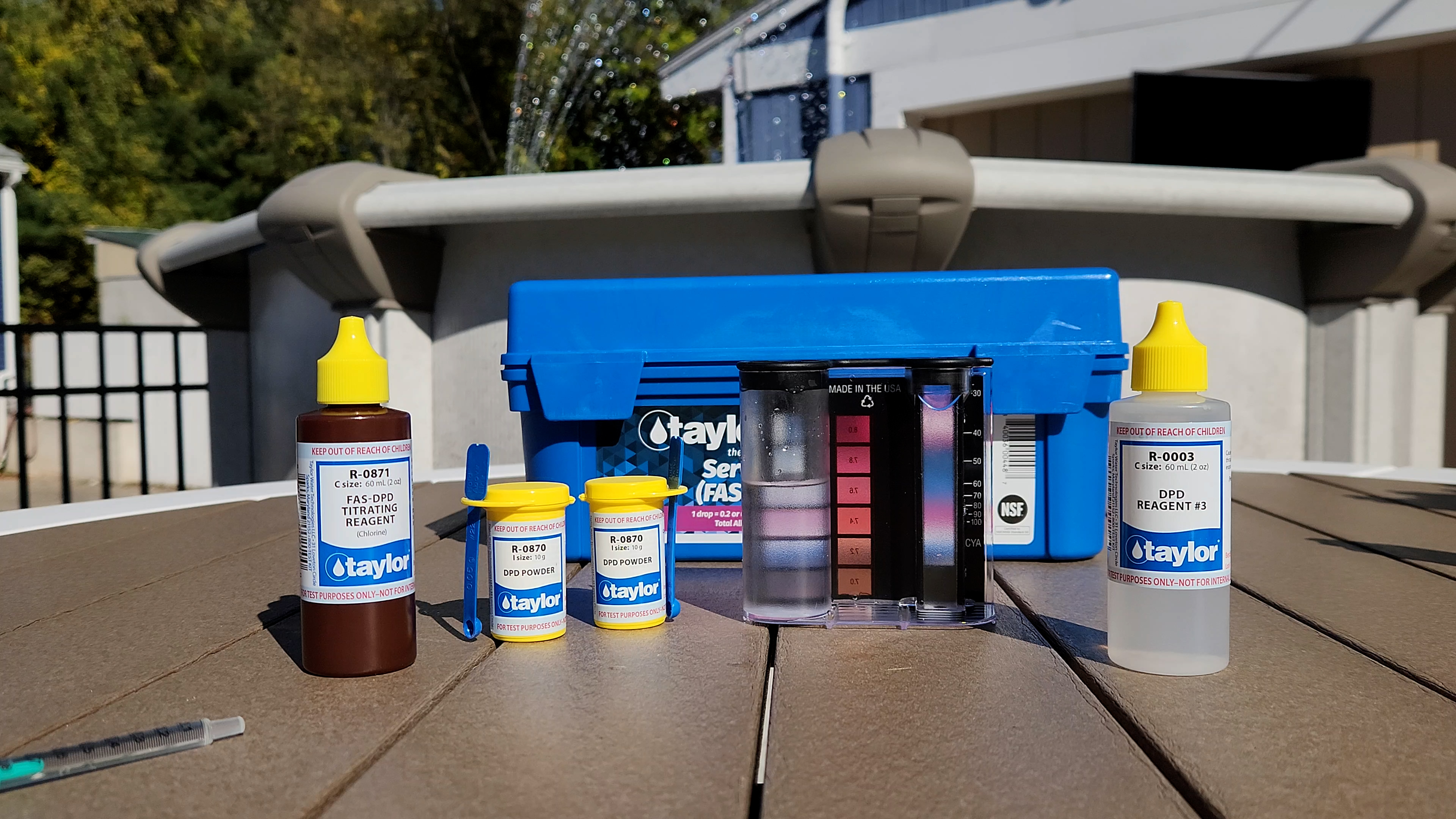
- Add 2 level scoops of DPD Powder (R-0870)
- Water should turn pink
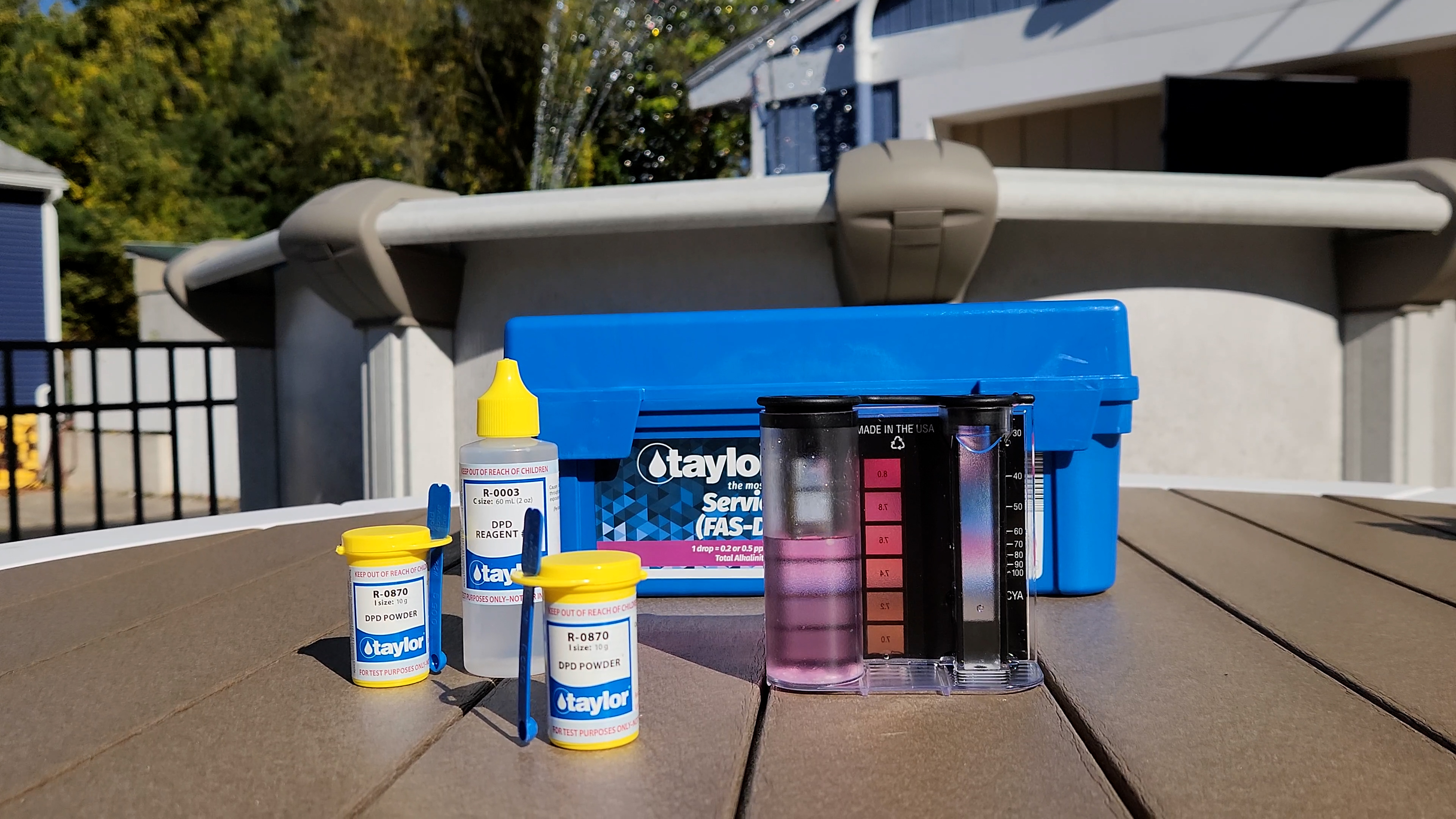
- Add one drop at a time of R-0871 Titrating Reagent, swirling after each drop

- Stop when the pink color disappears and the sample turns clear
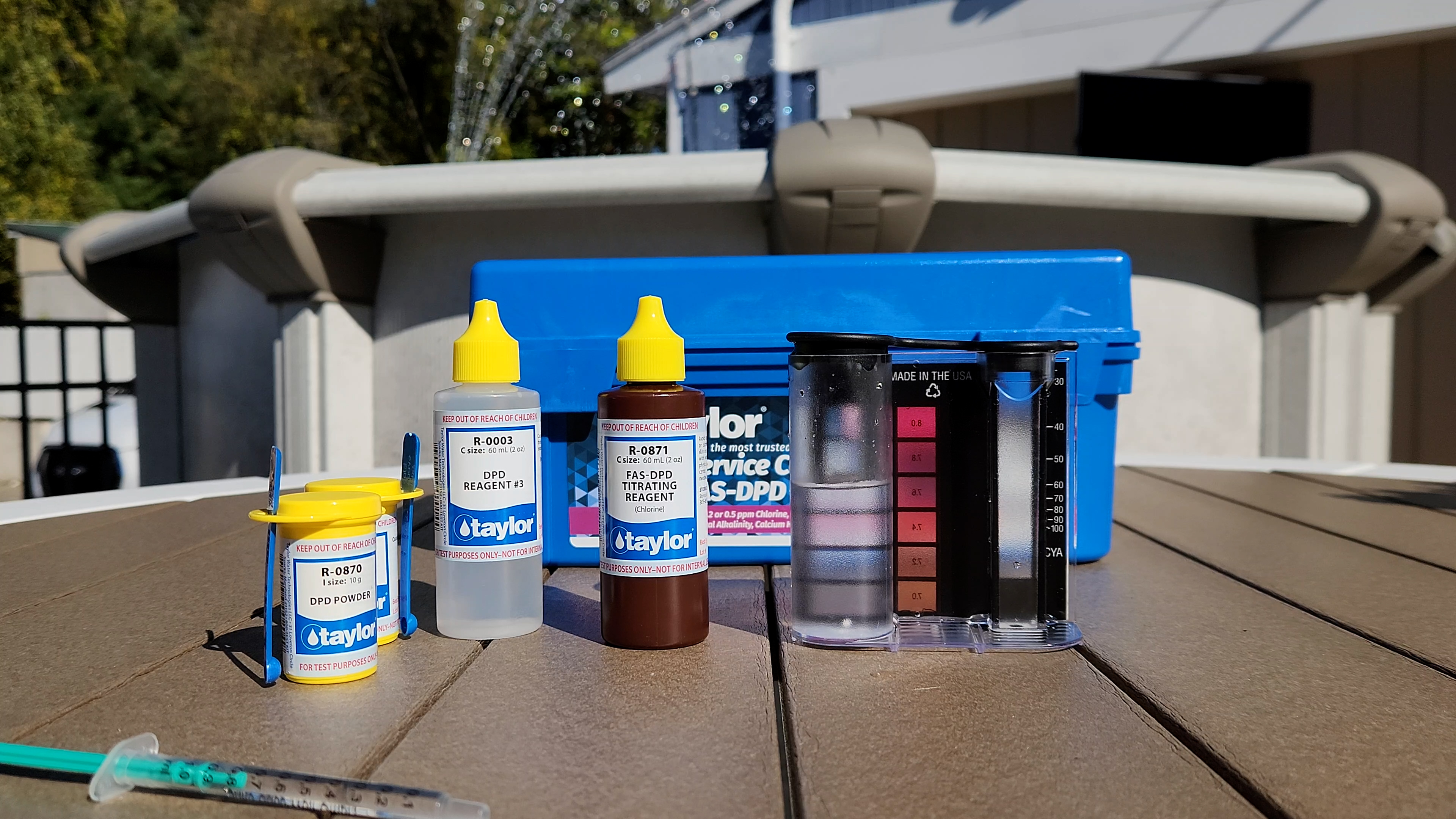
- Count the drops
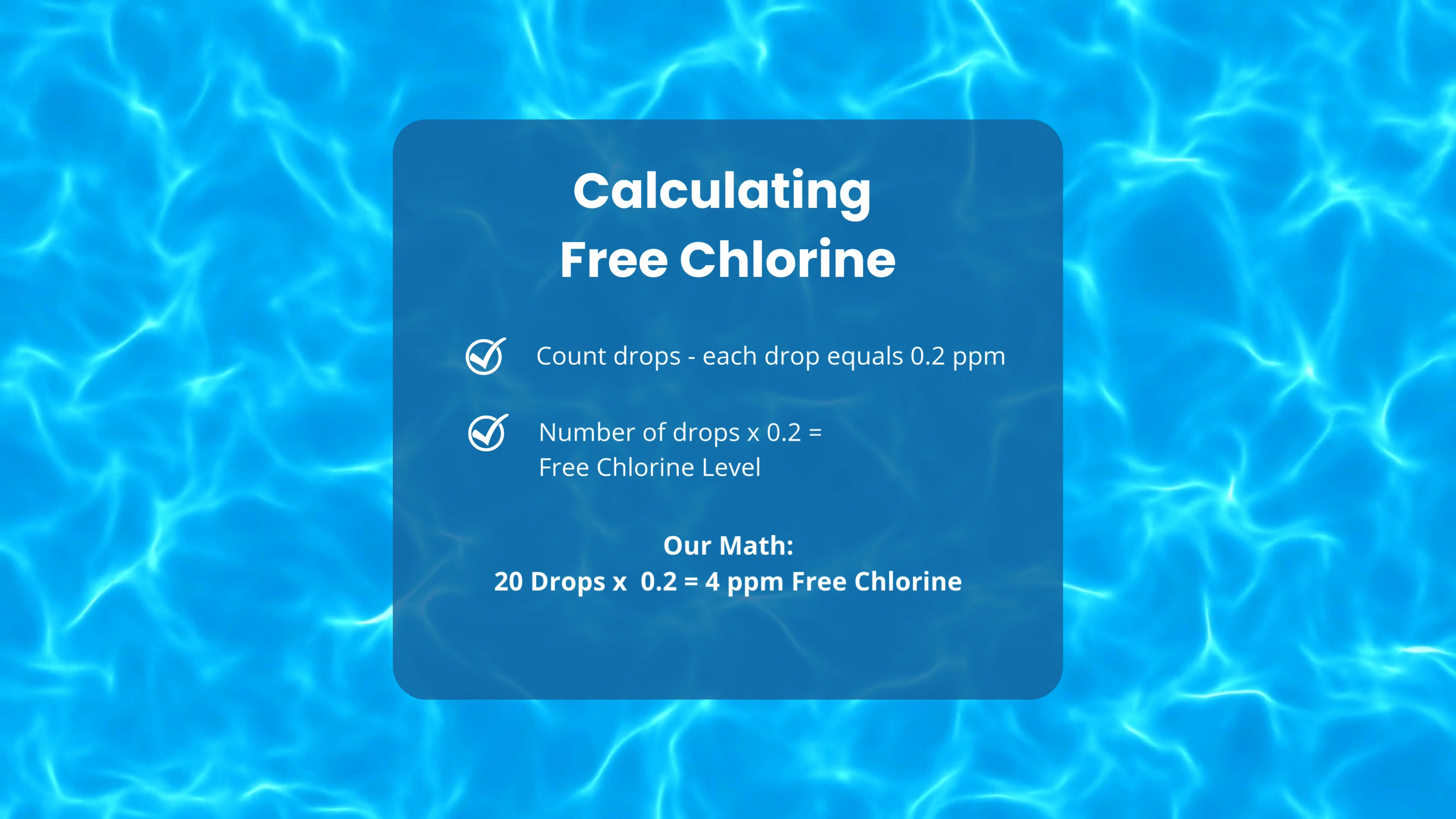
- Multiply drops × 0.2 to get Free Chlorine (ppm)
Example:
20 drops × 0.2 = 4 ppm Free Chlorine
Combined Chlorine (Optional Step)
If you add 5 drops of R-0003 after the sample turns clear and it turns pink again, that indicates Combined Chlorine (chloramines). Titrate again with R-0871 to determine the Combined Chlorine level.
Total Chlorine (TC)
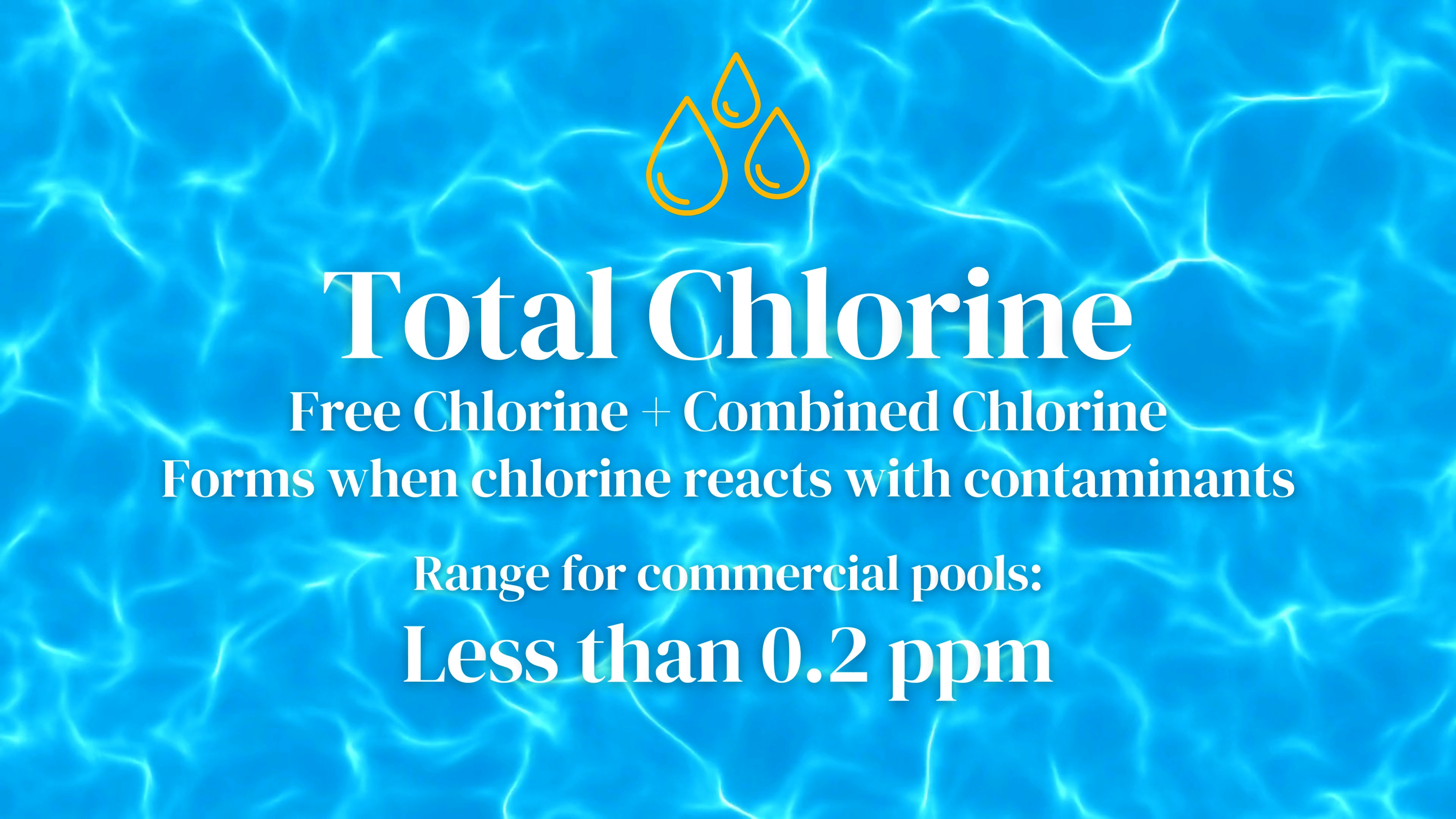
Total Chlorine includes both Free Chlorine and Combined Chlorine.
Ideal Combined Chlorine Level:
Less than 0.2 ppm
High Combined Chlorine causes the strong “chlorine smell” and indicates the pool may need to be shocked.
How to Test Total Chlorine
- Using the same sample from the Free Chlorine test
- Add 5 drops of R-0003
- If the sample turns pink, titrate again with R-0871
- Count drops × 0.2 = Combined Chlorine
- Free Chlorine + Combined Chlorine = Total Chlorine
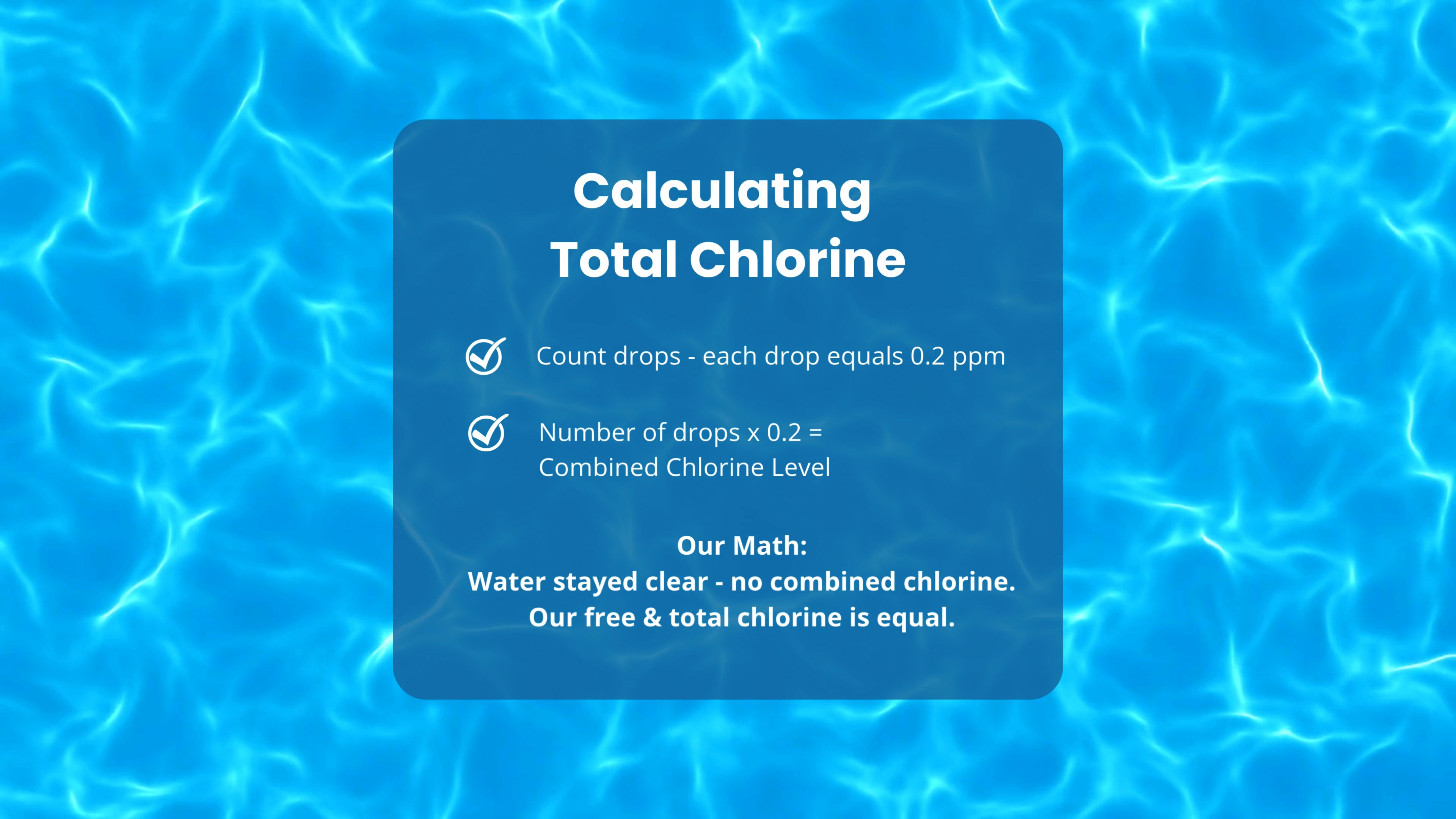
If the sample stays clear, Total Chlorine equals Free Chlorine.
pH
pH measures how acidic or basic your pool water is.
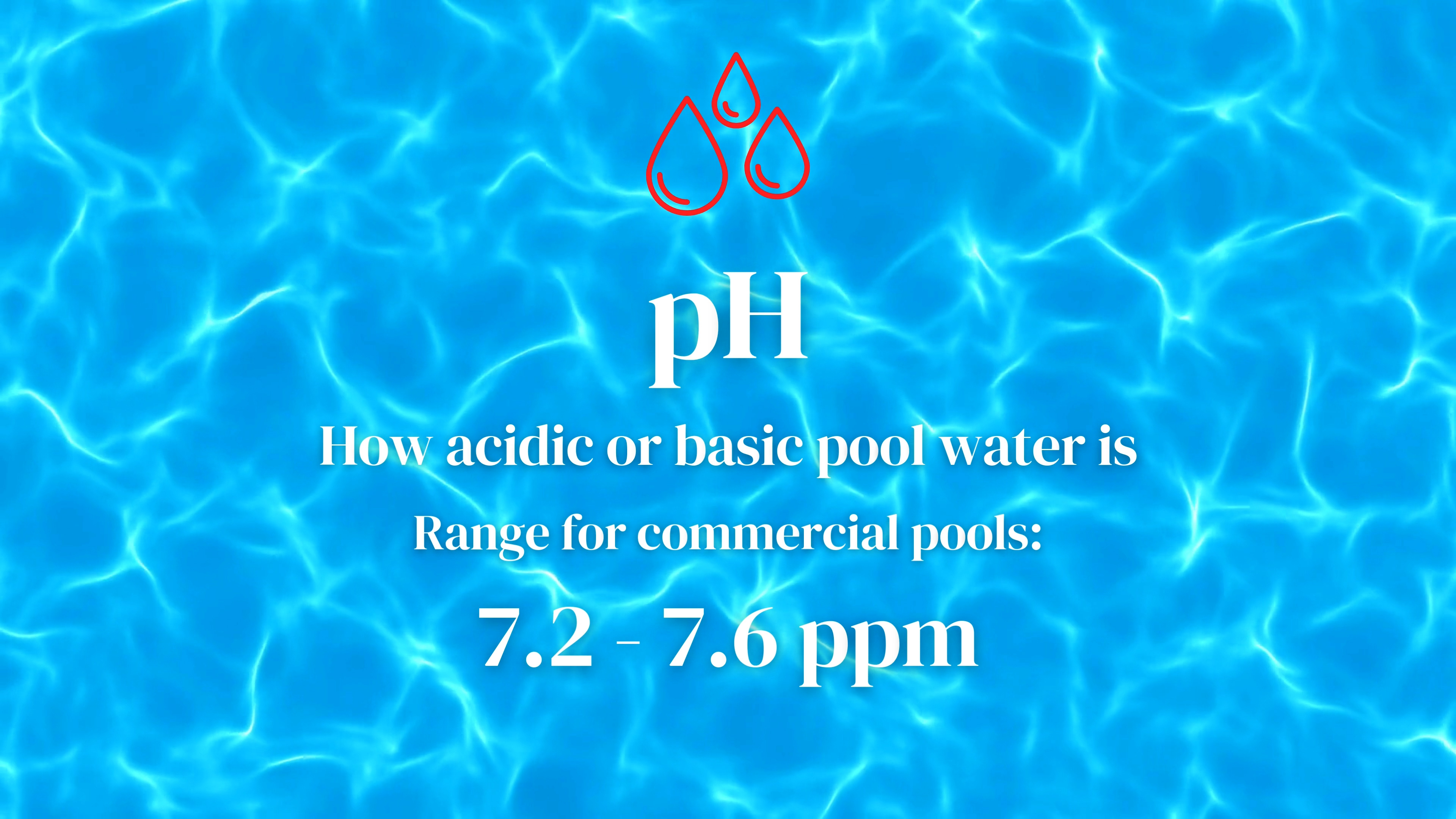
Ideal pH Range (Commercial Pools):
7.2–7.6
Proper pH helps chlorine work efficiently and prevents corrosion, scaling, and swimmer discomfort.
Reagents used: Red caps
How to Test pH
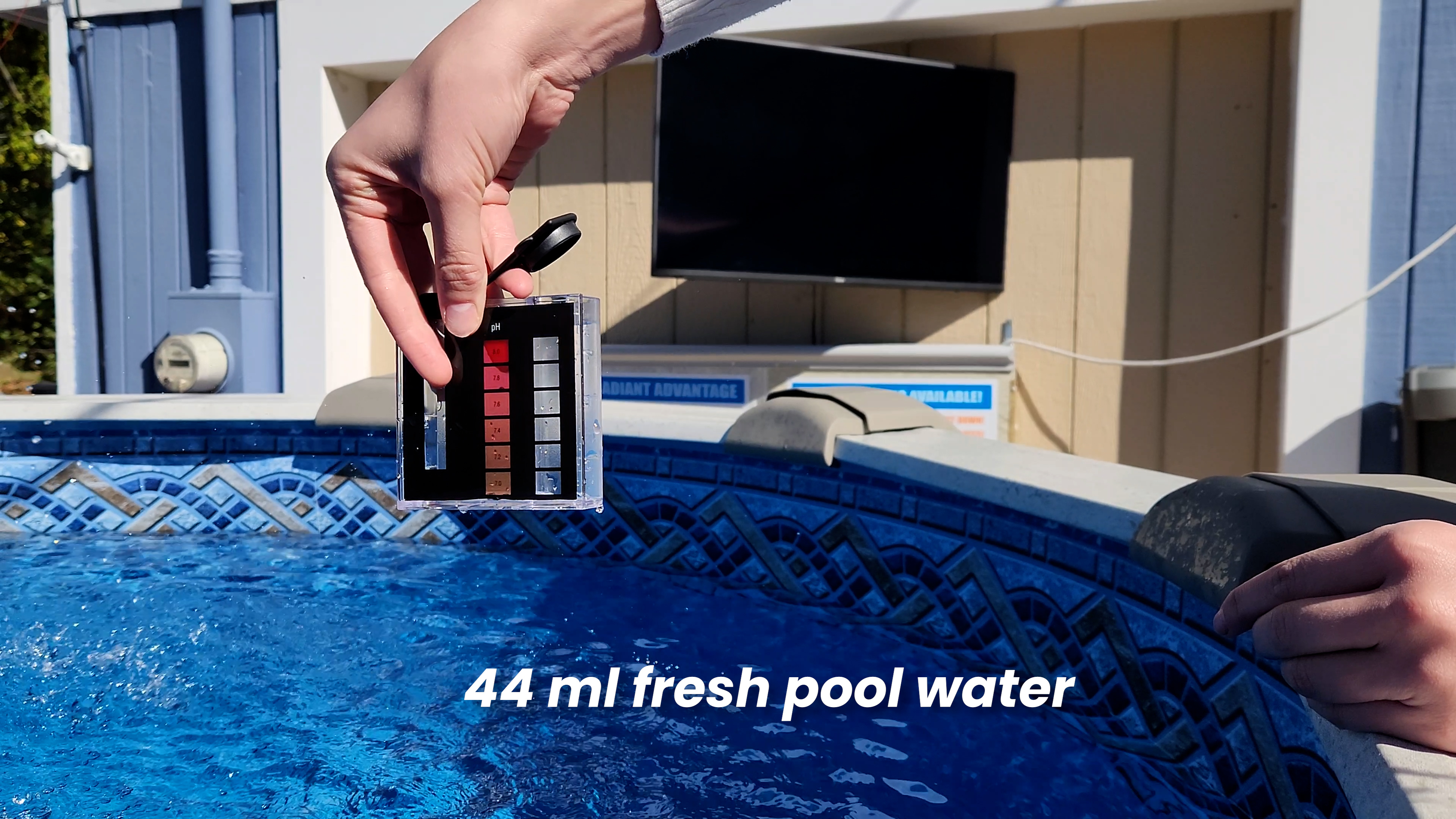
- Rinse the test tube and fill to 44 mL with fresh pool water
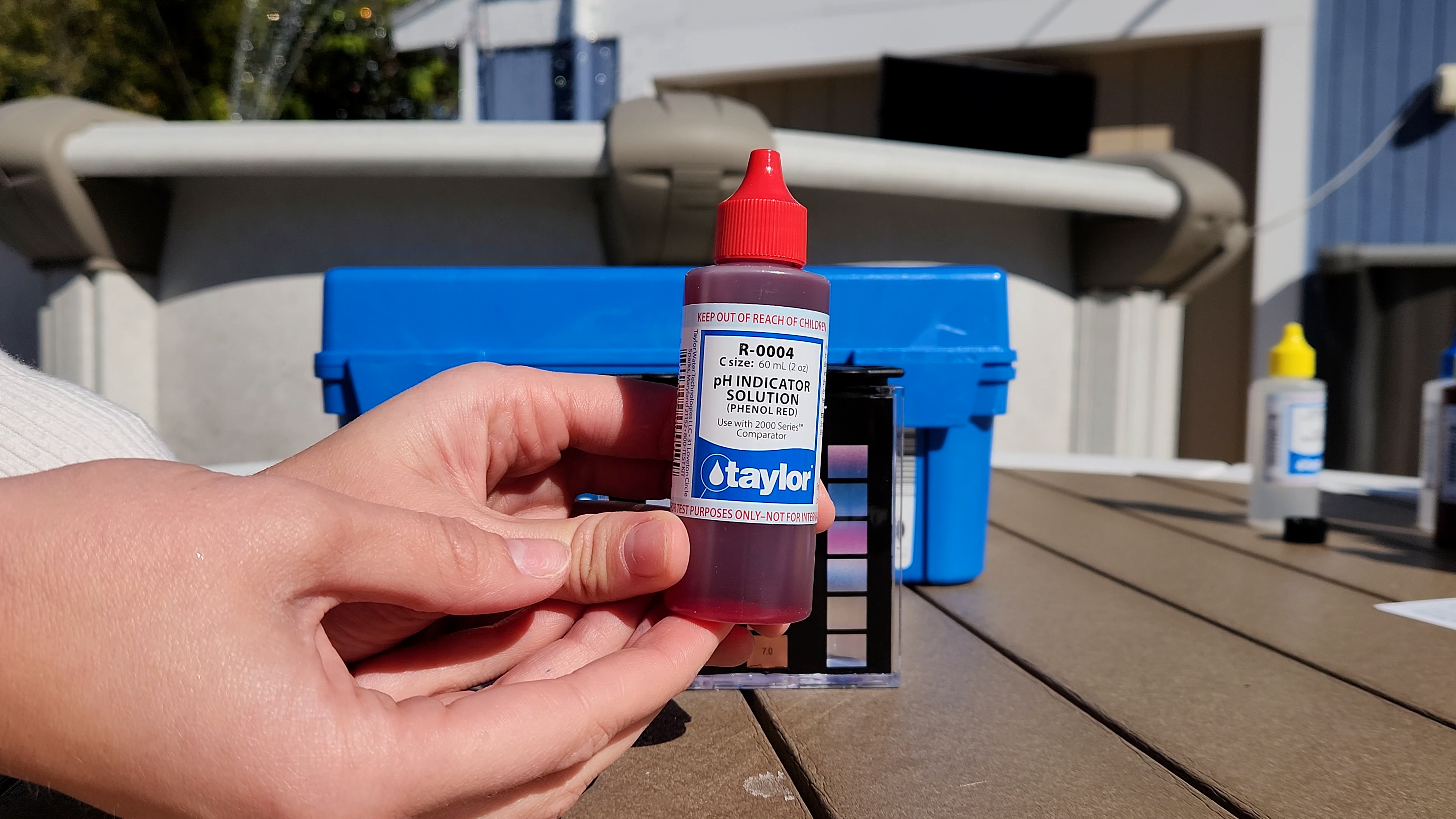
- Add 5 drops of R-0004 (pH Indicator Solution)
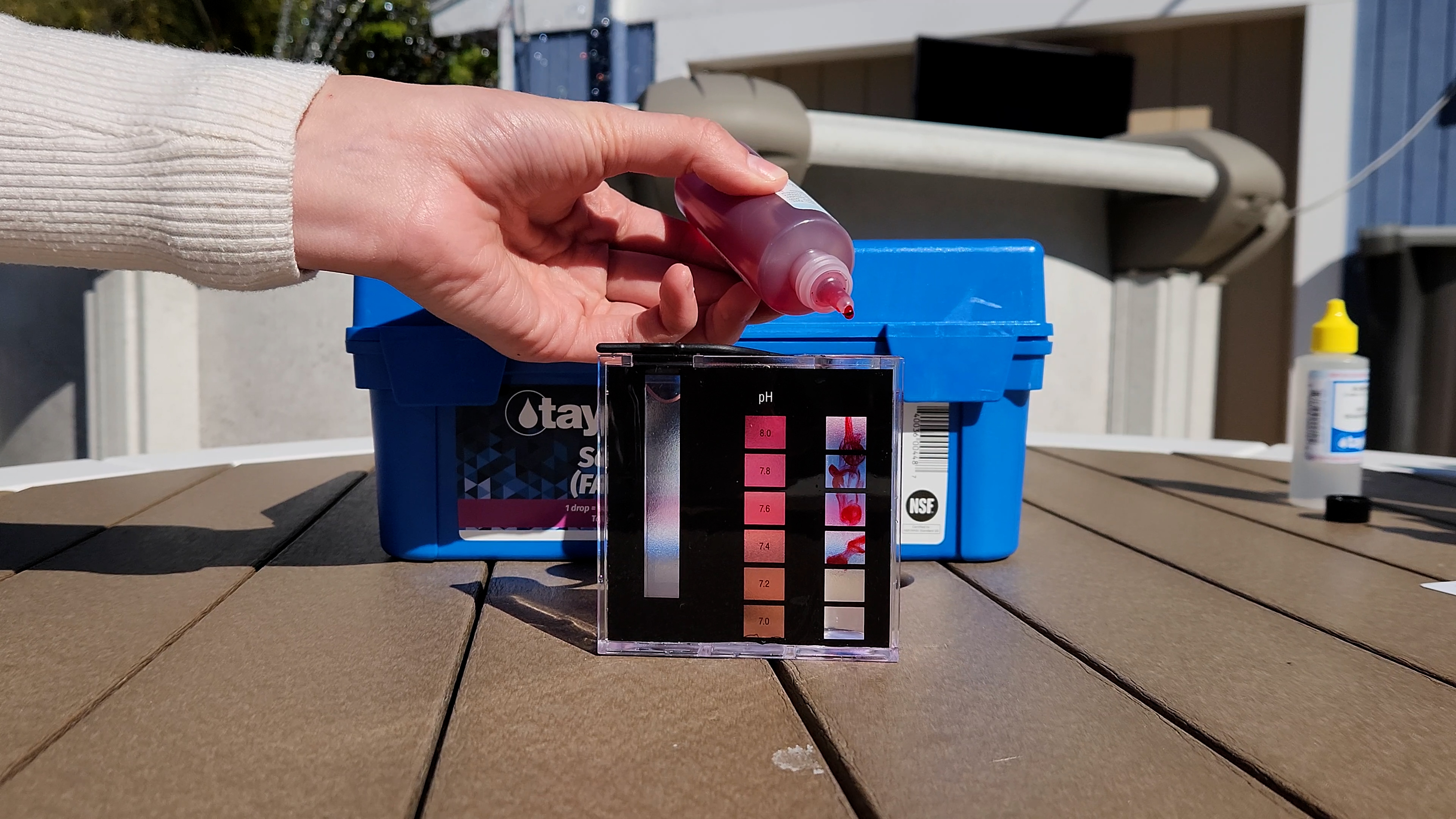
- Swirl gently
- Compare the color to the pH chart on the test block
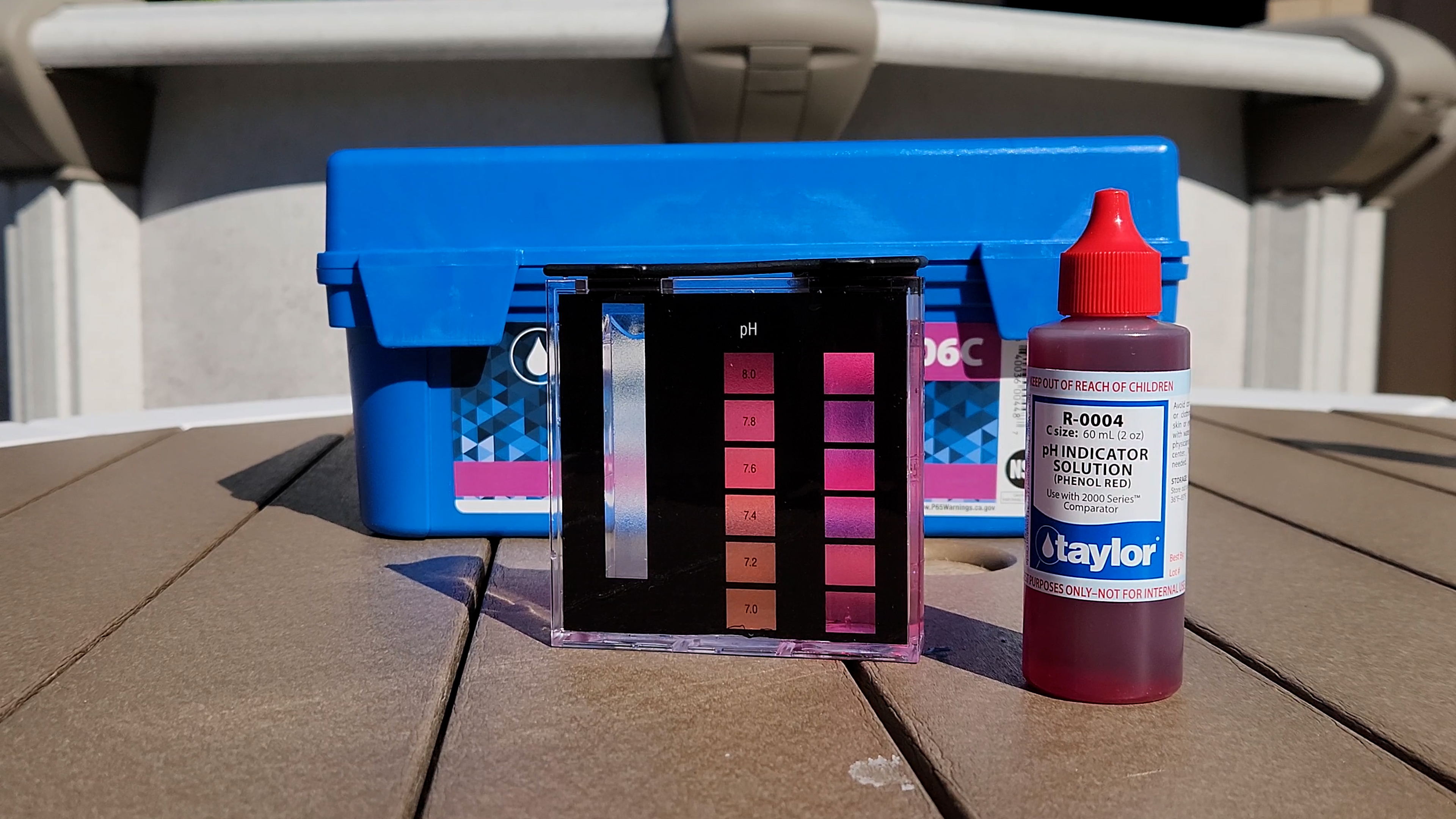
If the color falls between two values, your pH is the average of those readings.
Adjusting pH
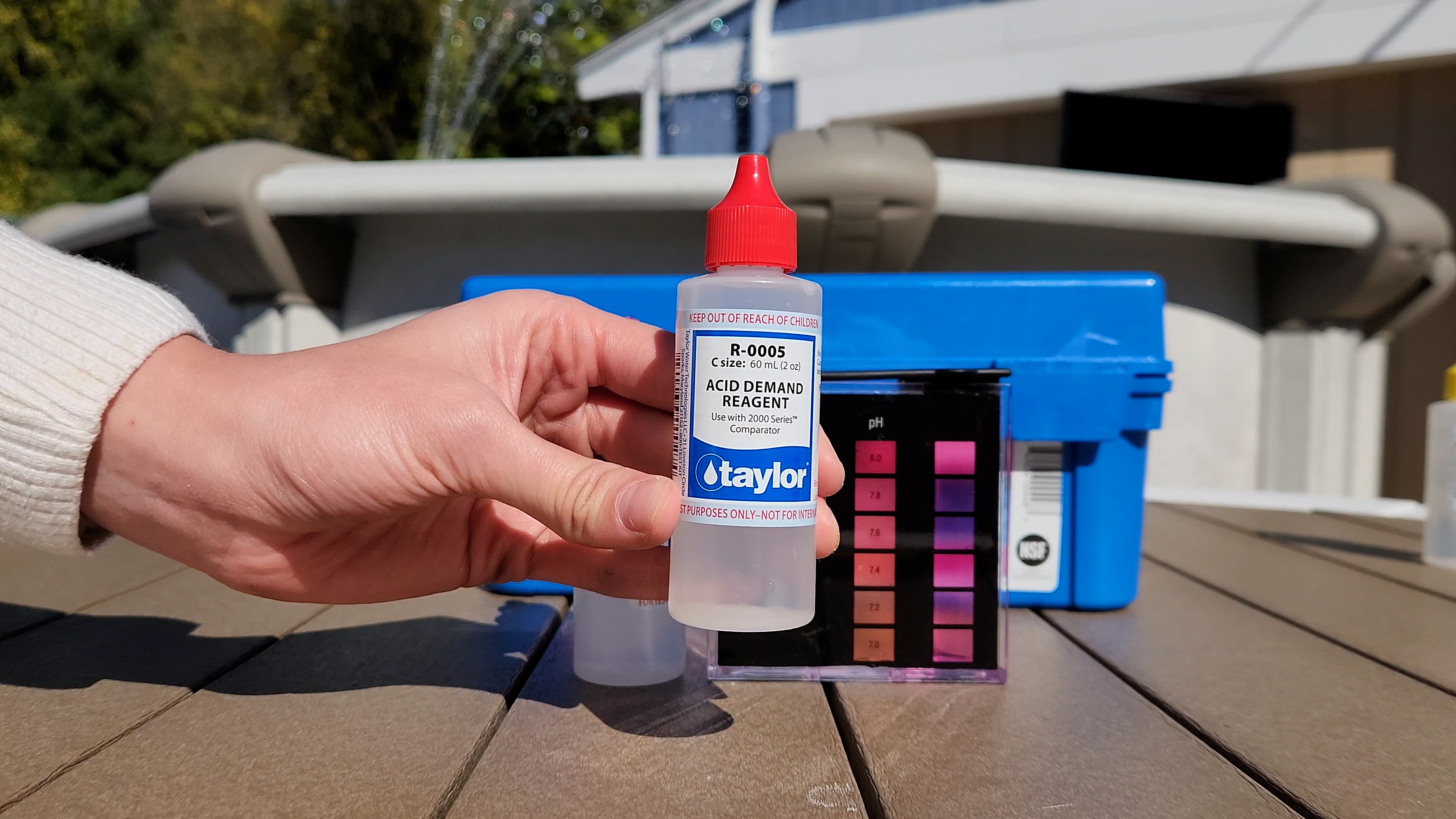
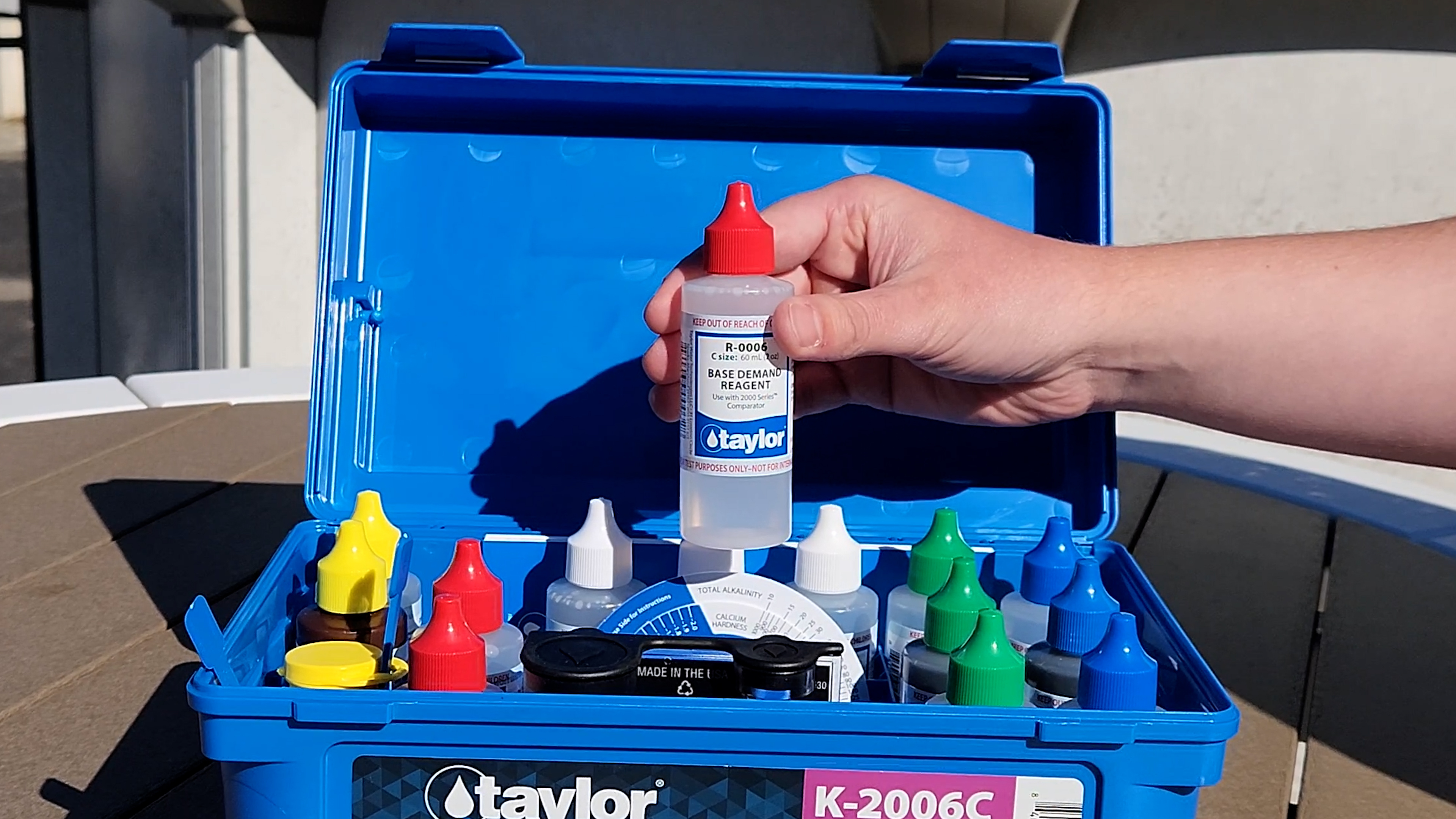
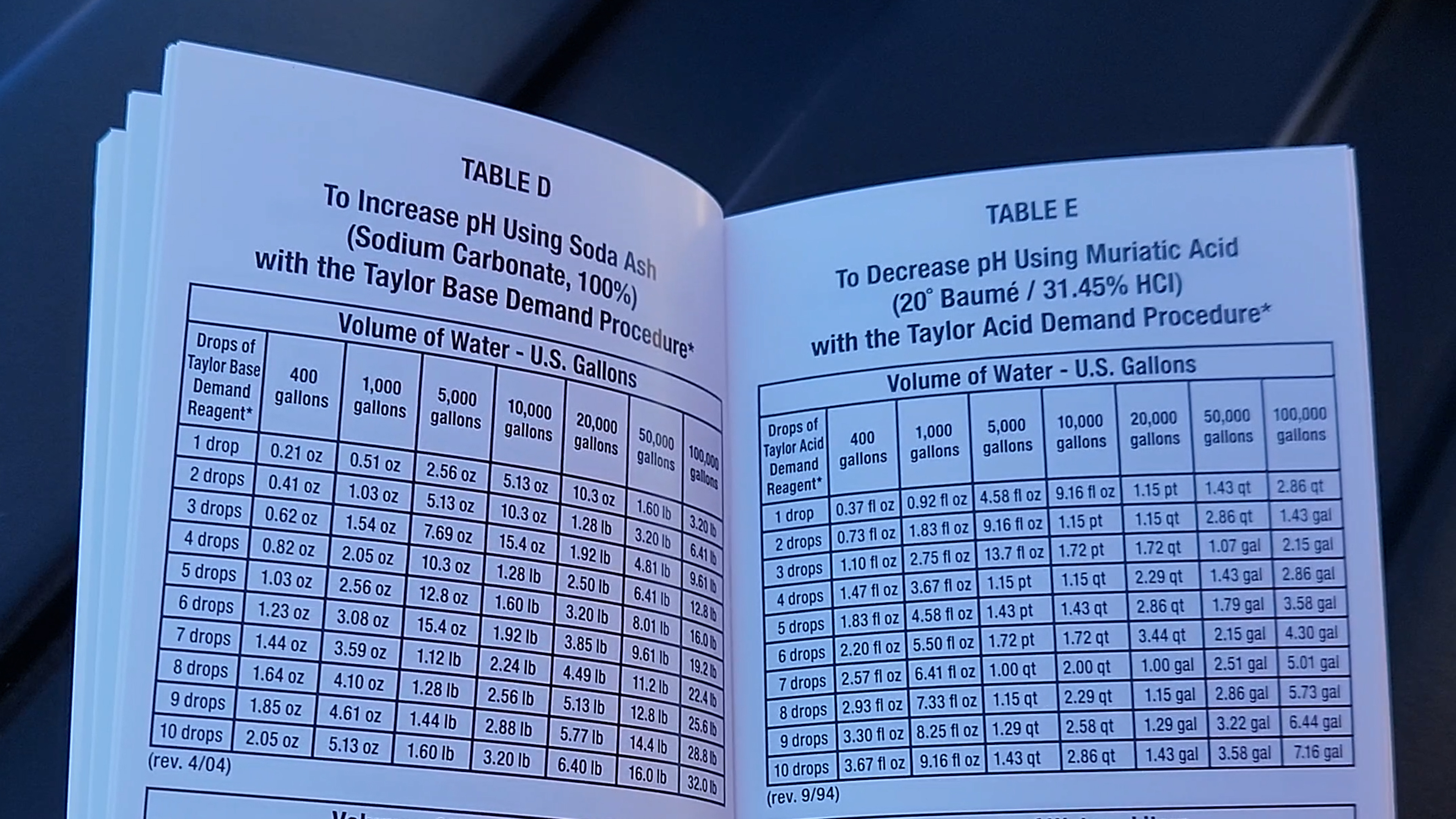
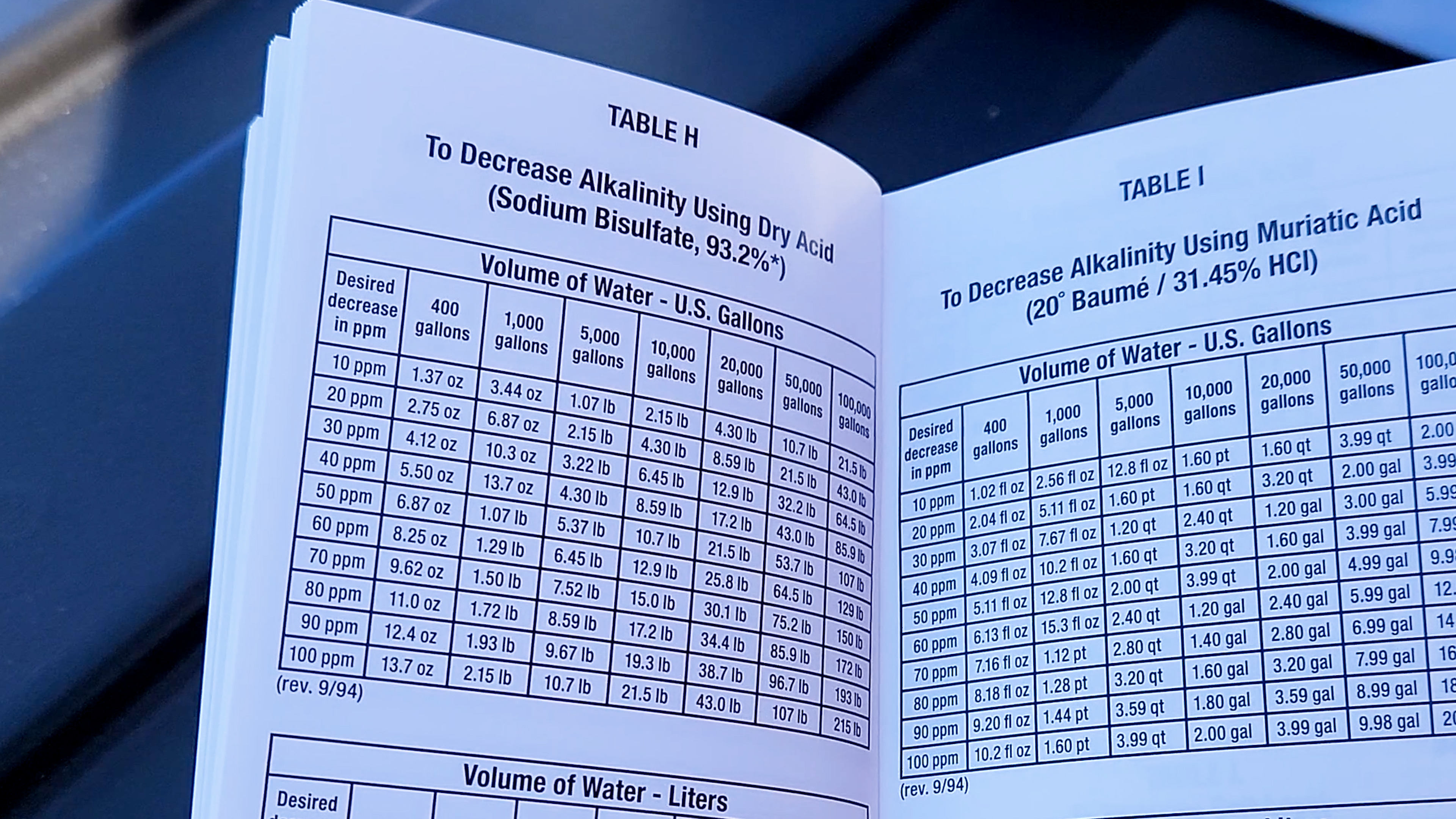
Add one drop at a time, matching the color to the ideal range. Record the number of drops and use Tables D and E in the Taylor guidebook to determine the correct dosage for your pool size.
Total Alkalinity (TA)
Total Alkalinity acts as a buffer for pH, helping keep it stable and preventing rapid swings.
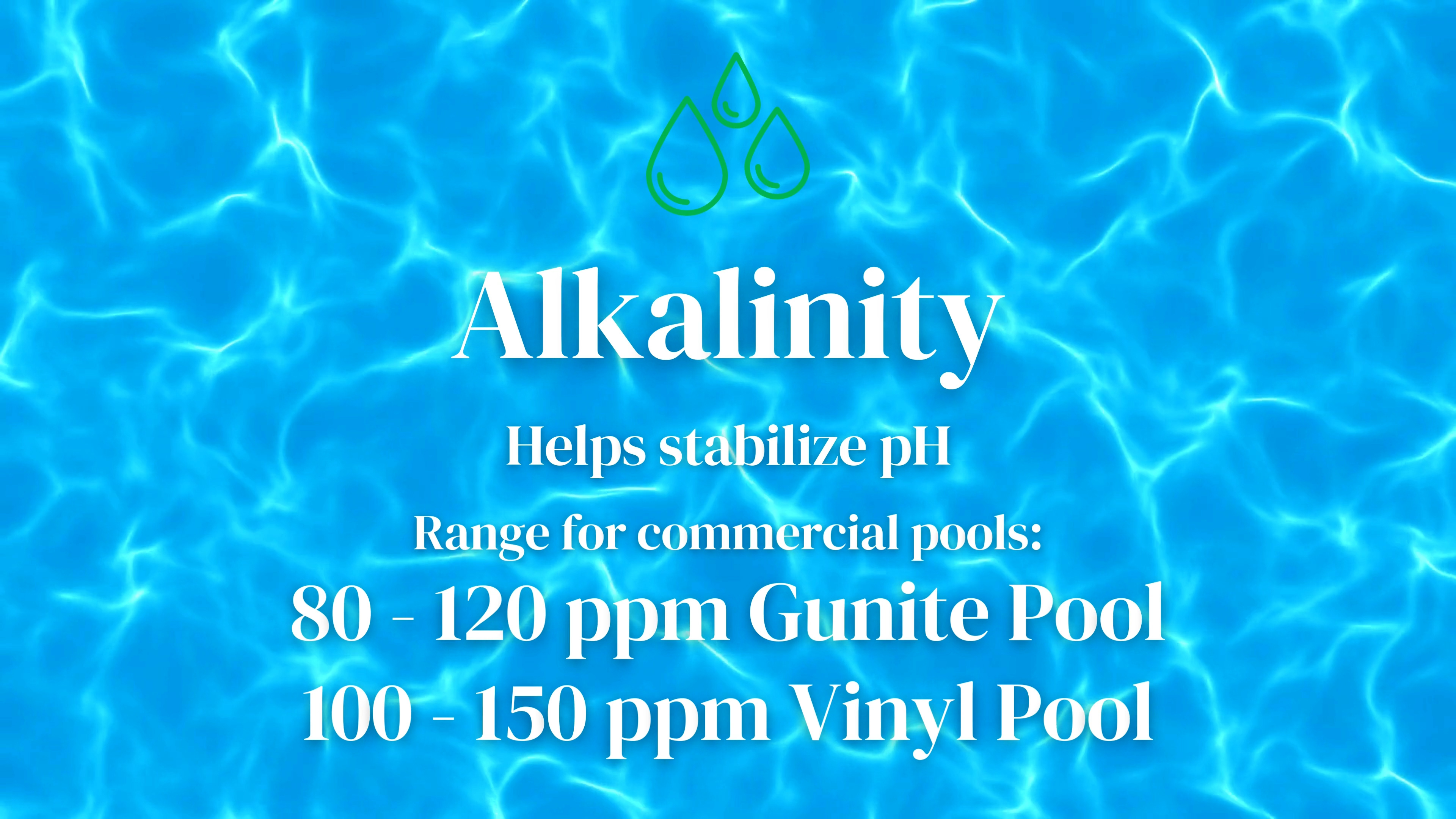
Ideal Total Alkalinity Range:
- Gunite pools: 80–120 ppm
- Vinyl liner pools: 100–150 ppm
Reagents used: Green caps
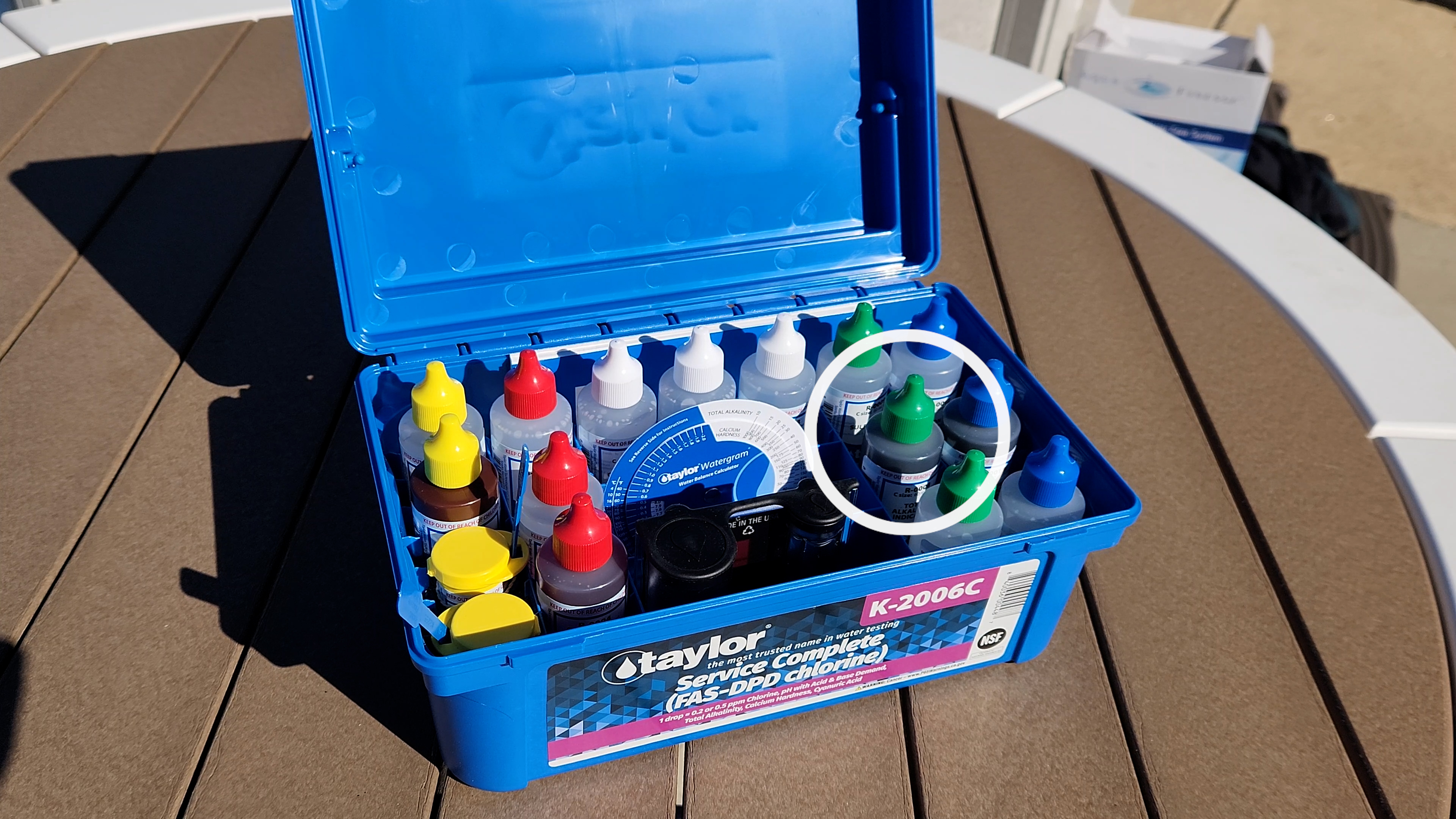
How to Test Total Alkalinity
- Fill the test tube to 25 mL
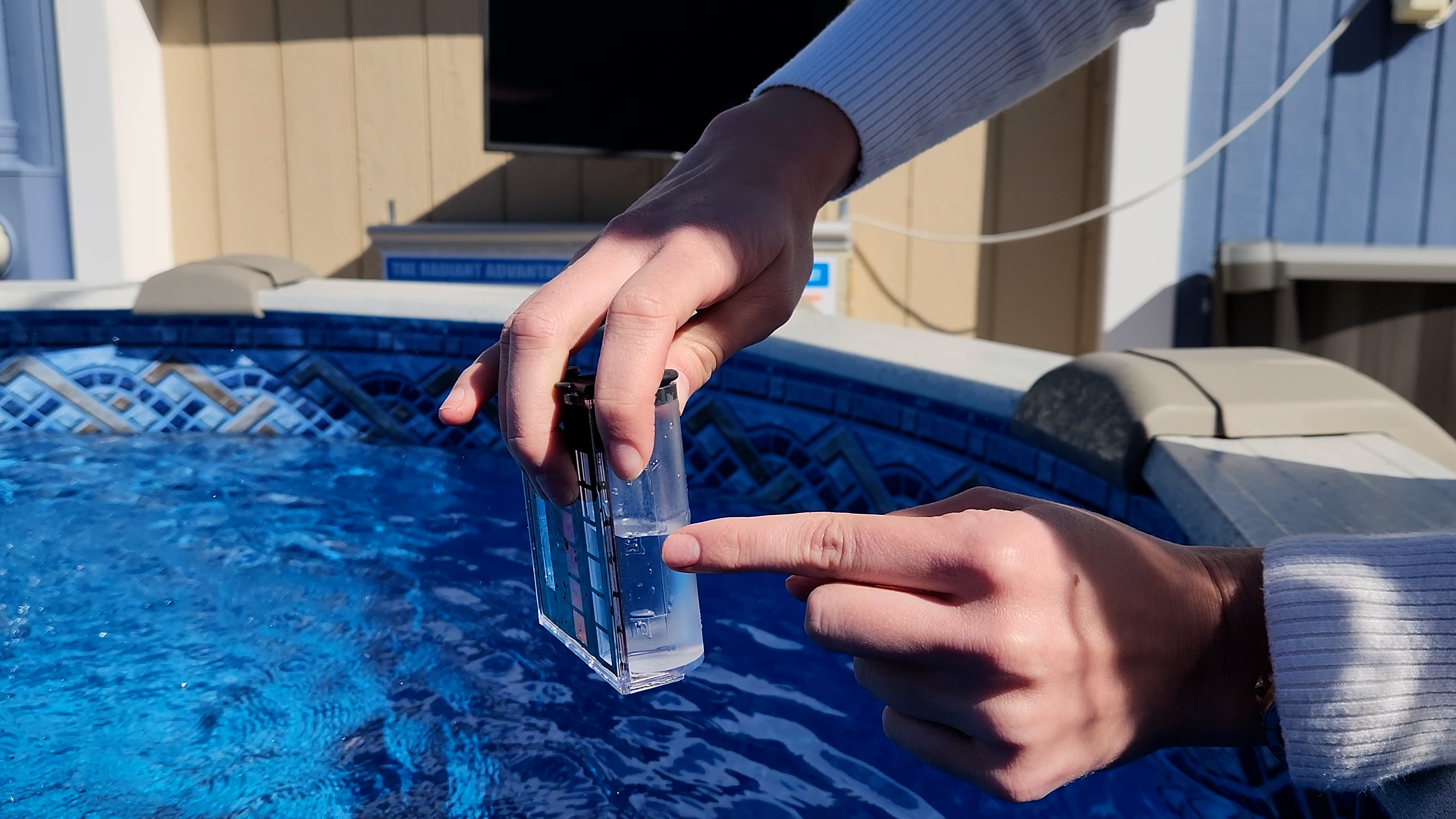
- Add 2 drops of R-0007 (Thiosulfate Reagent) and swirl
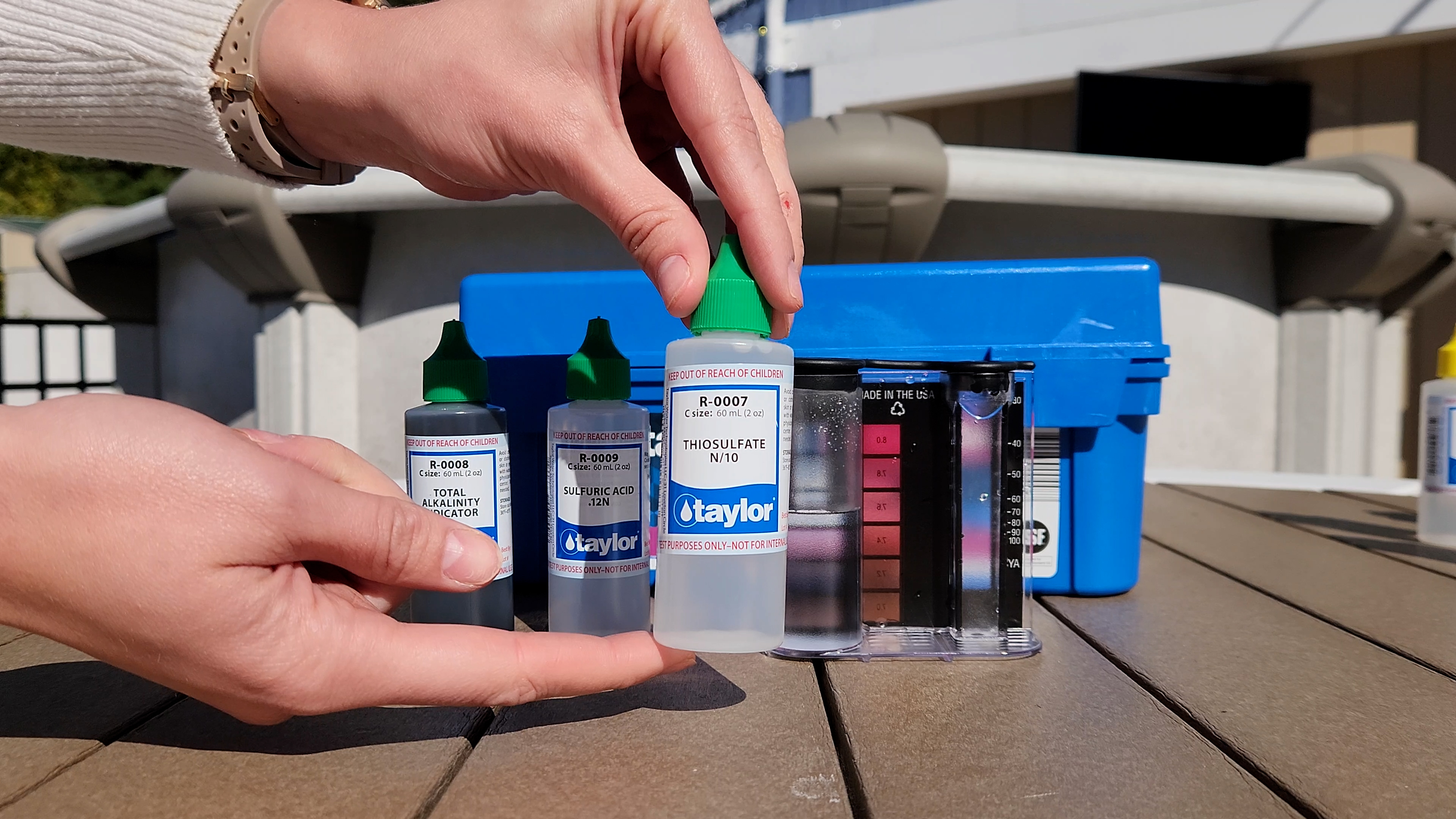
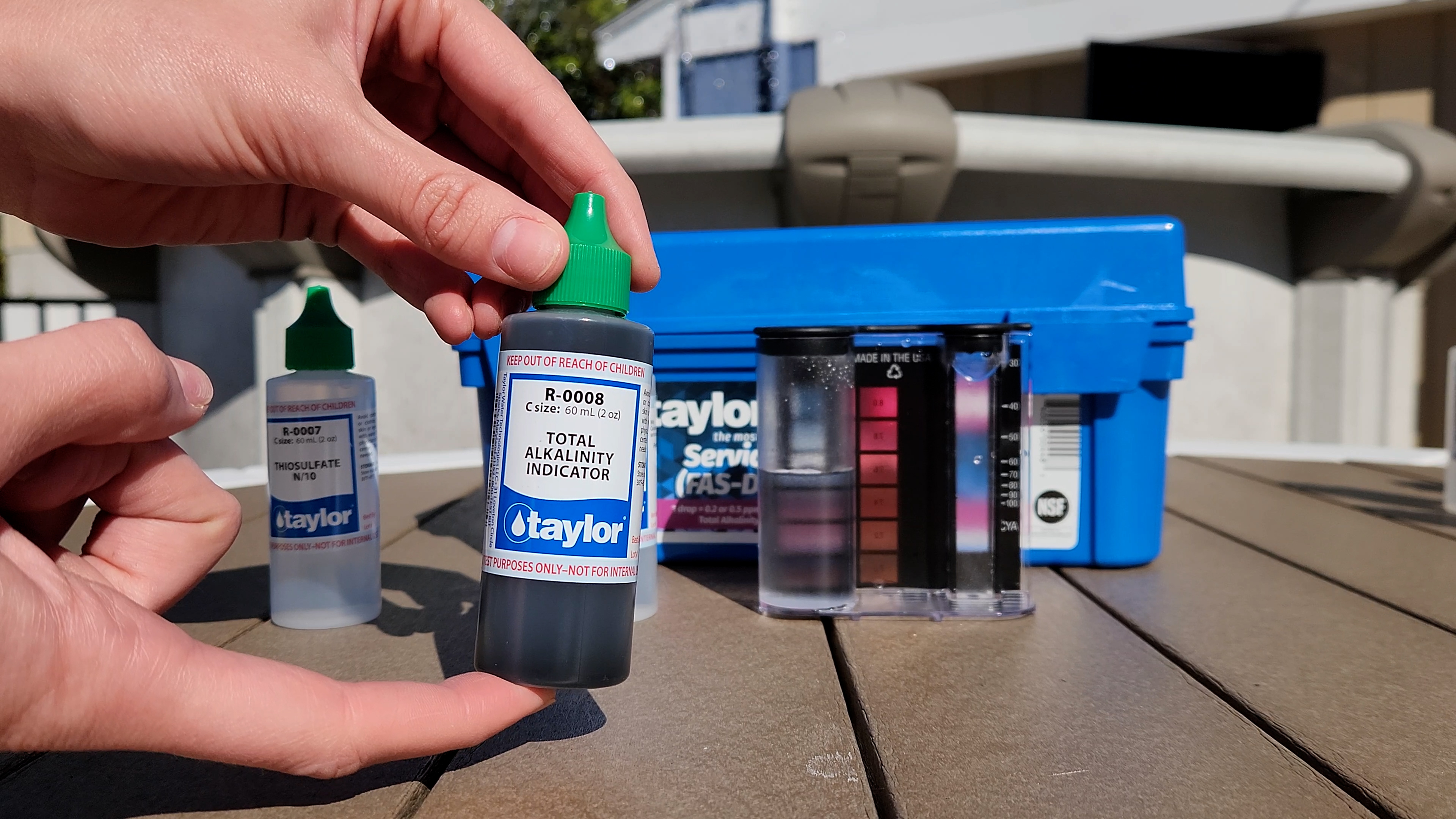
- Add 5 drops of R-0008 (Alkalinity Indicator) and swirl
- The sample should turn green
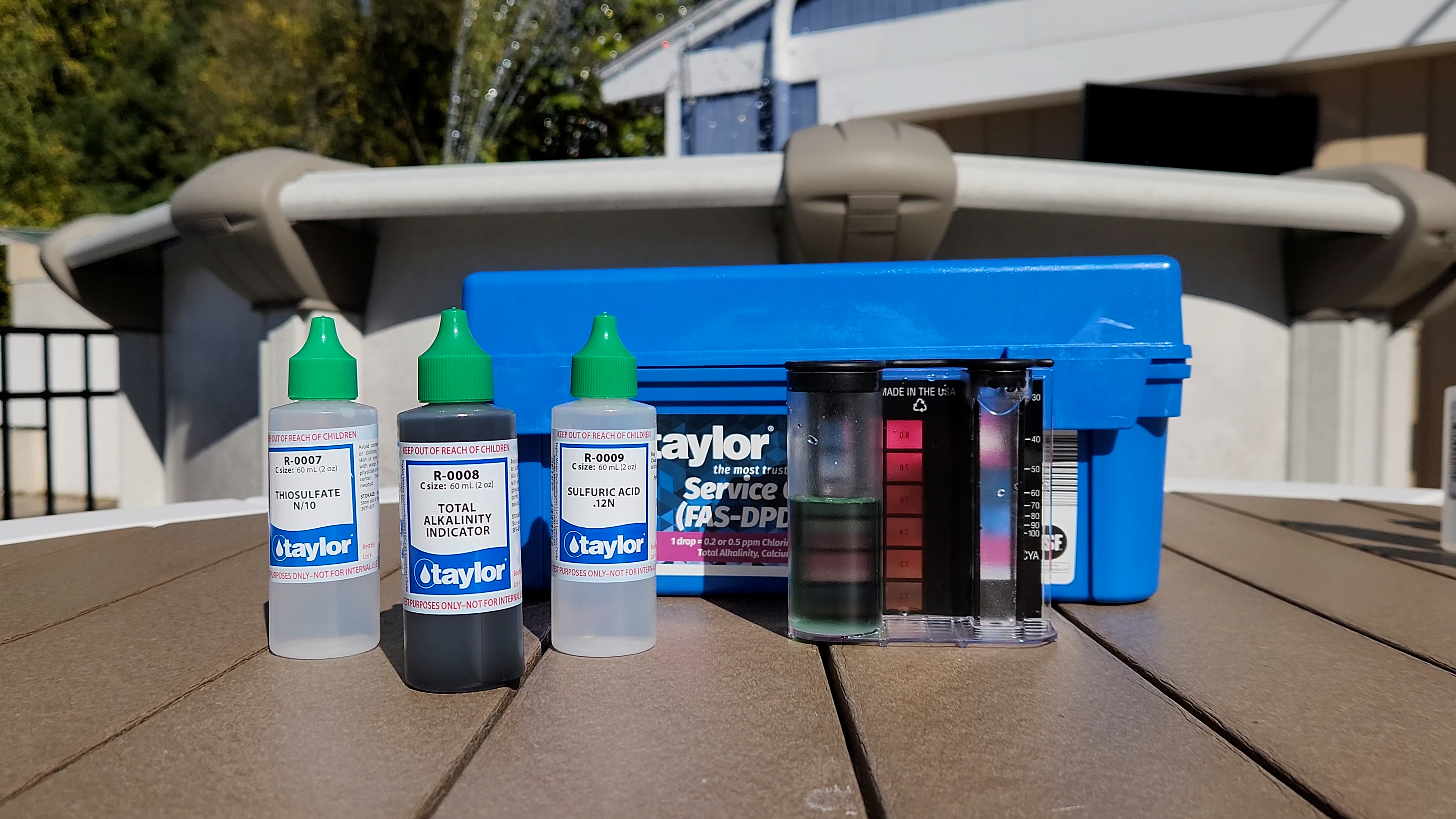
- Add R-0009 (Sulfuric Acid Titrating Reagent) one drop at a time
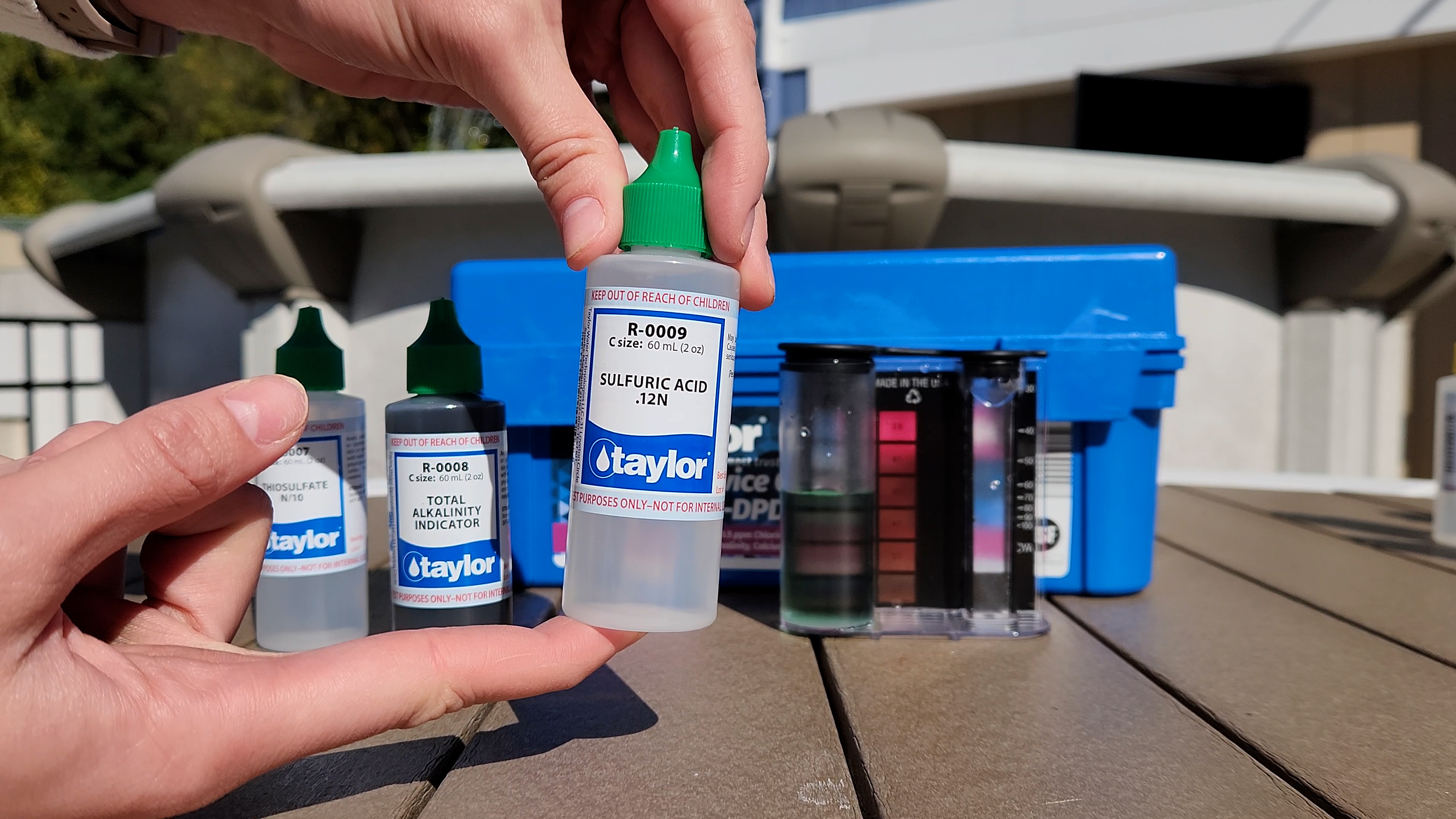
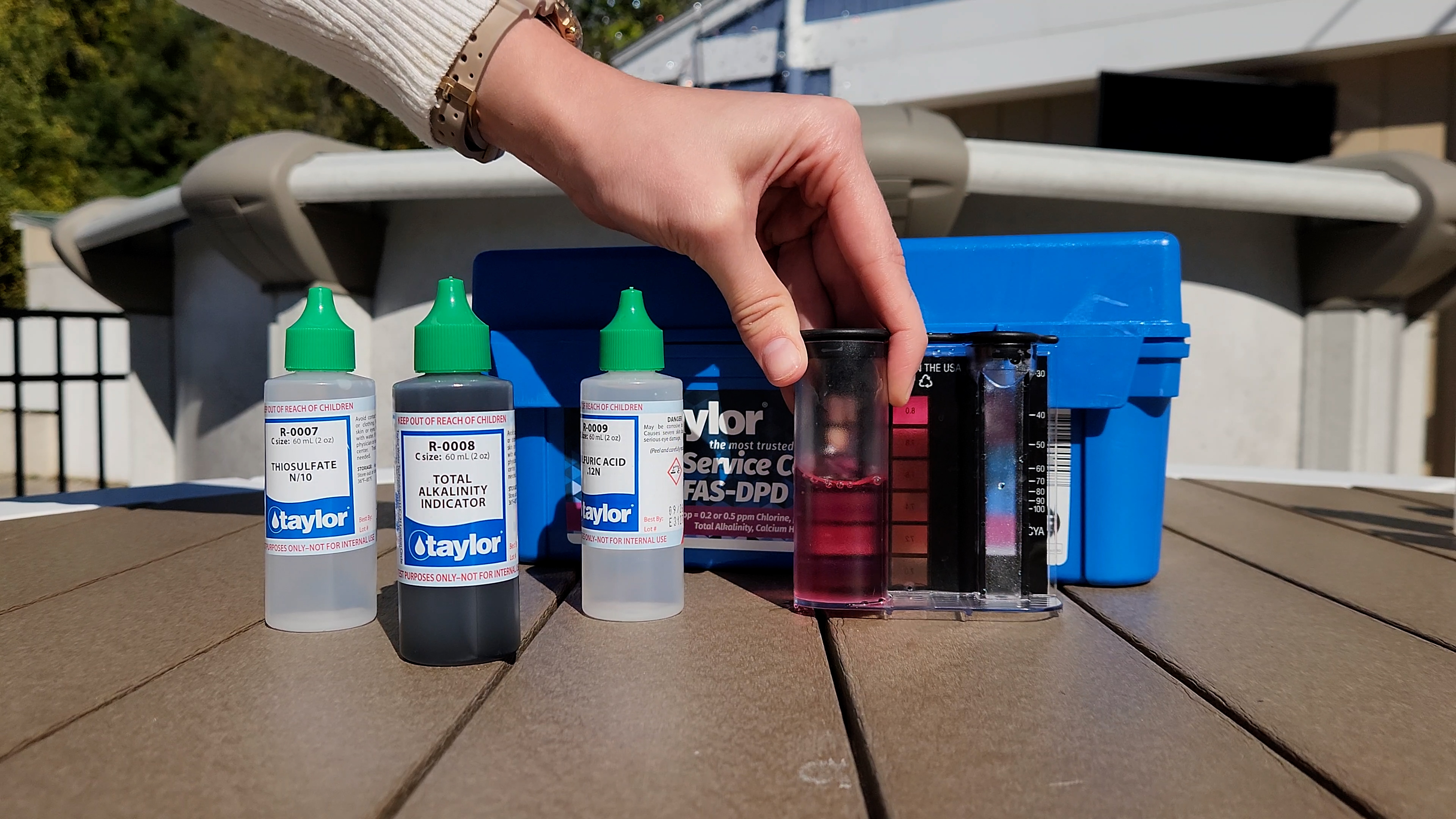
- Swirl after each drop until color changes from green to red
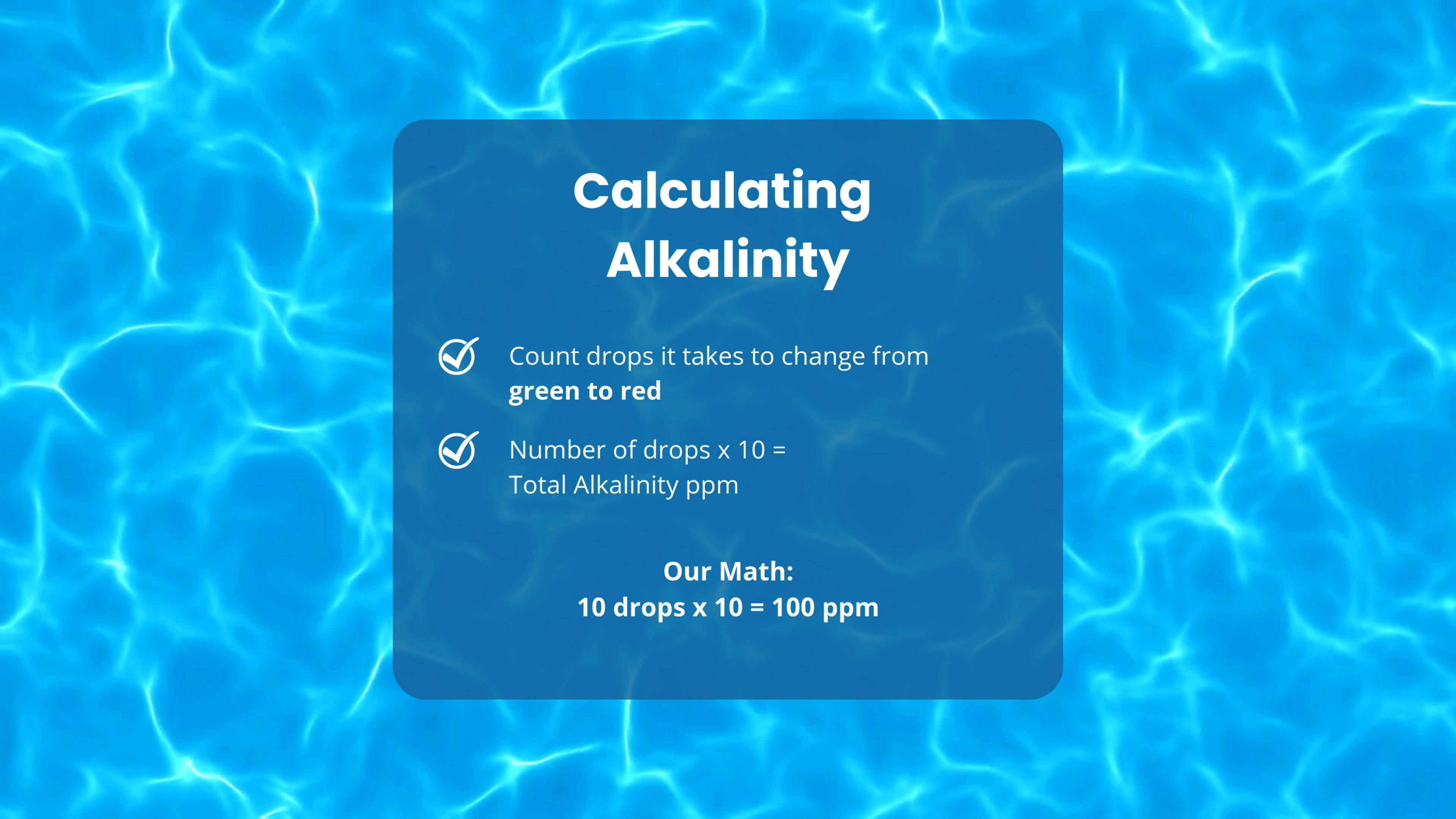
- Count drops × 10 = Total Alkalinity (ppm)
Example:
10 drops × 10 = 100 ppm Total Alkalinity
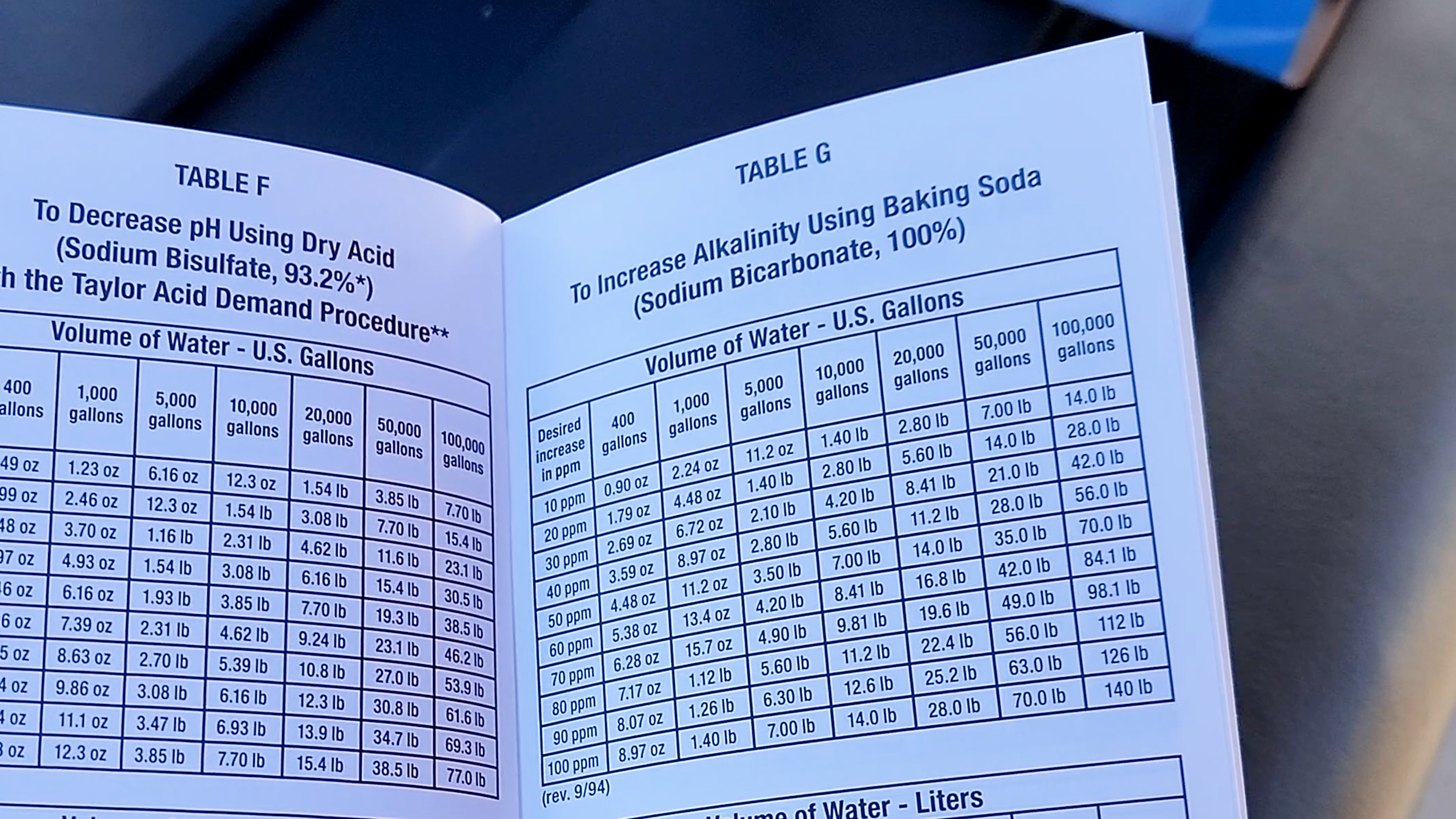
Refer to Tables F and G in the Taylor guidebook for treatment guidance.
Calcium Hardness (CH)
Calcium Hardness measures dissolved calcium in the water.
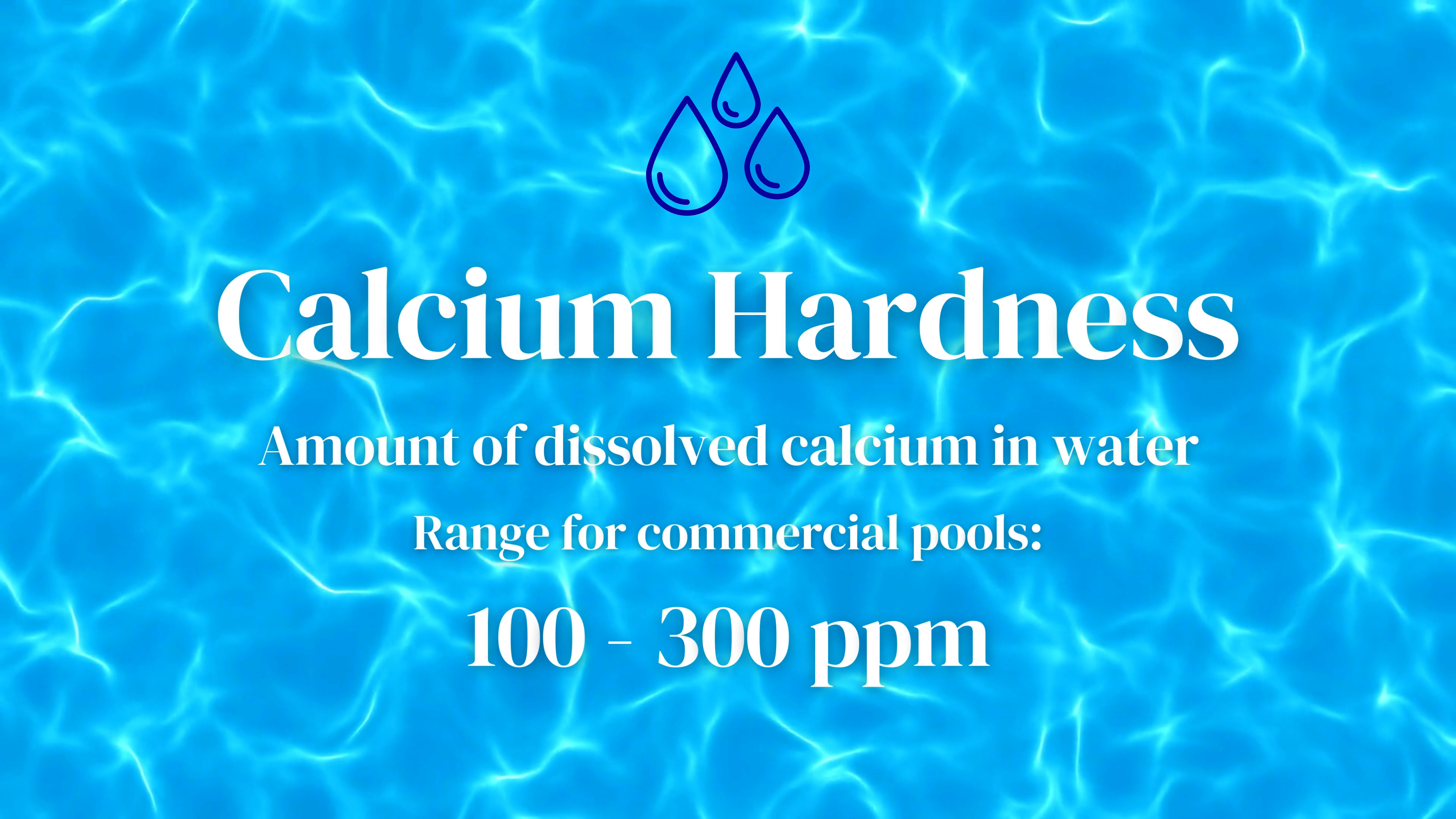
Ideal Calcium Hardness Range (Commercial Pools):
100–300 ppm
Proper levels help prevent surface damage from soft water and scaling from hard water.
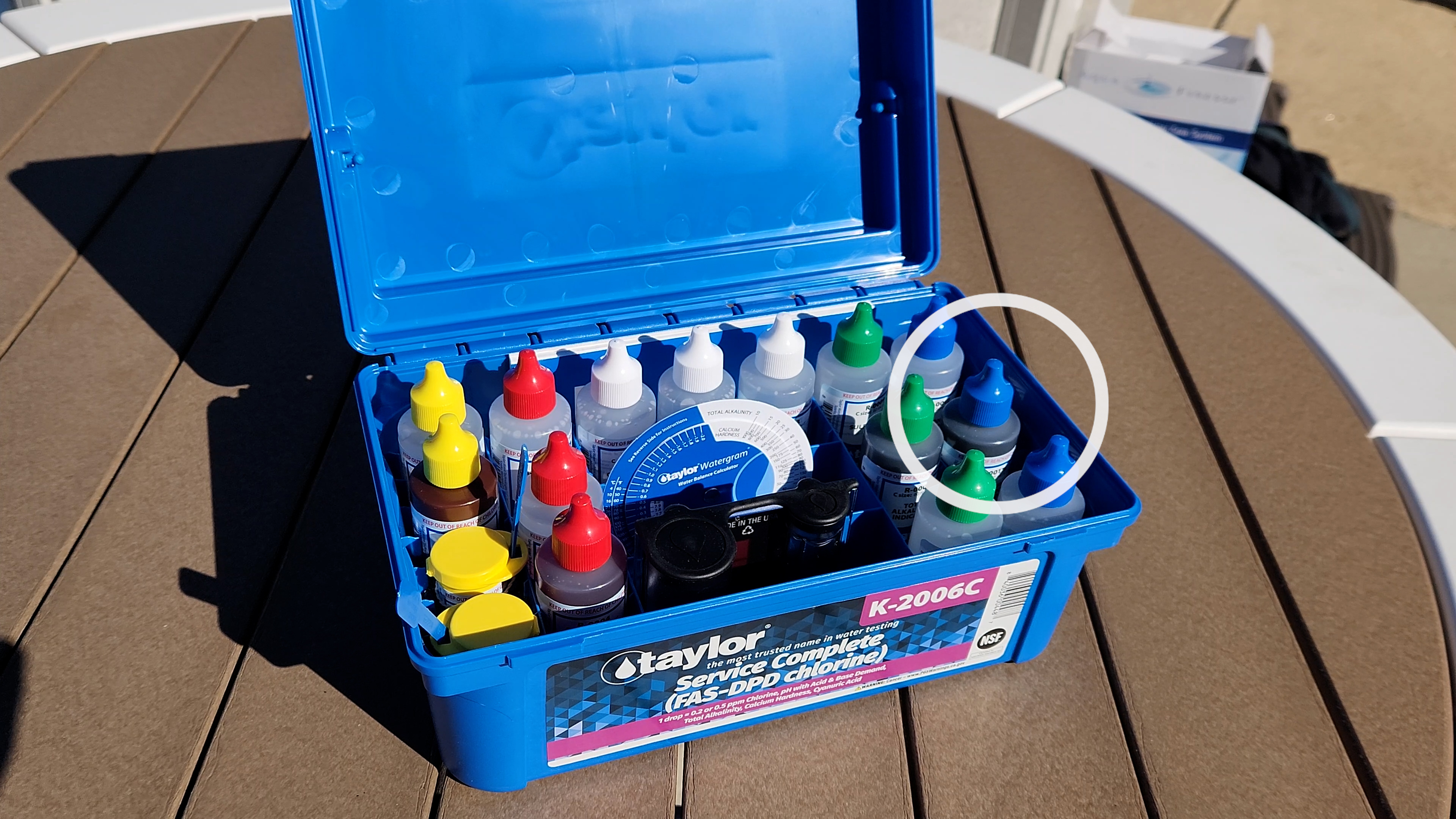
Reagents used: Blue caps
How to Test Calcium Hardness
- Fill the large test tube to 25 mL

- Add 20 drops of R-0010 (Calcium Buffer) and swirl

- Add 5 drops of R-0011L (Calcium Indicator) and swirl
- The sample should turn red
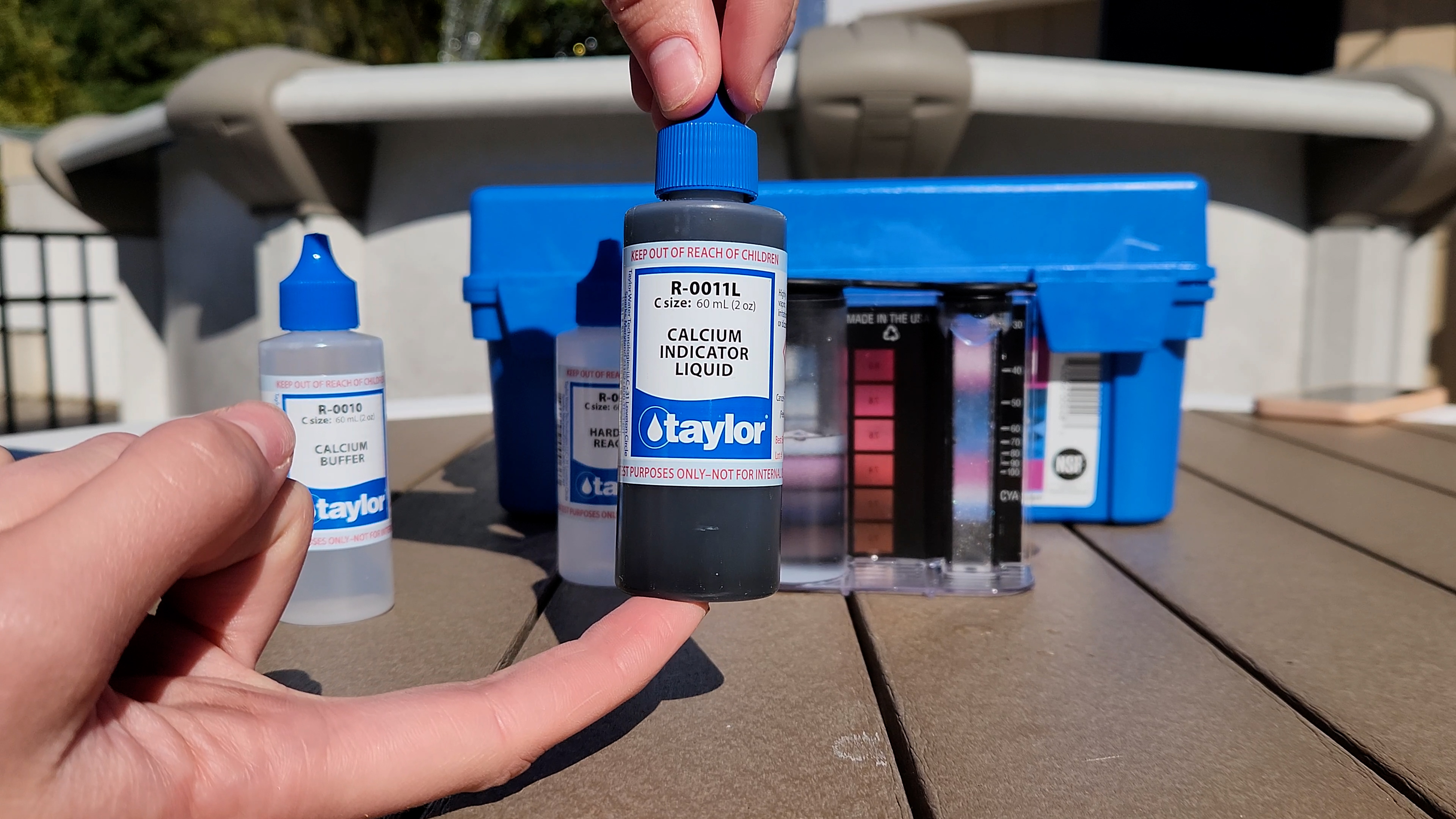
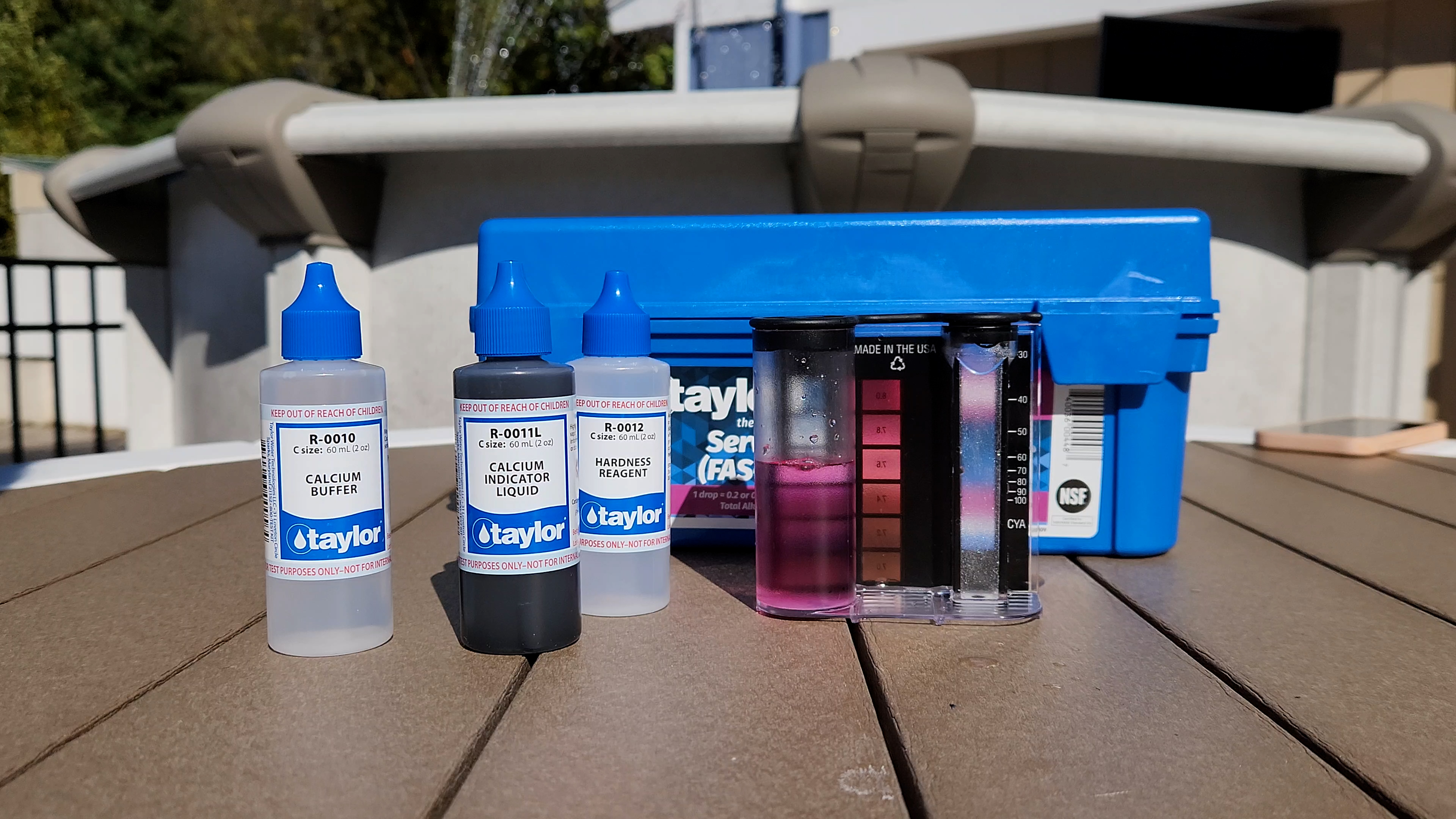
- Add R-0012 (Calcium Hardness Titrant) one drop at a time
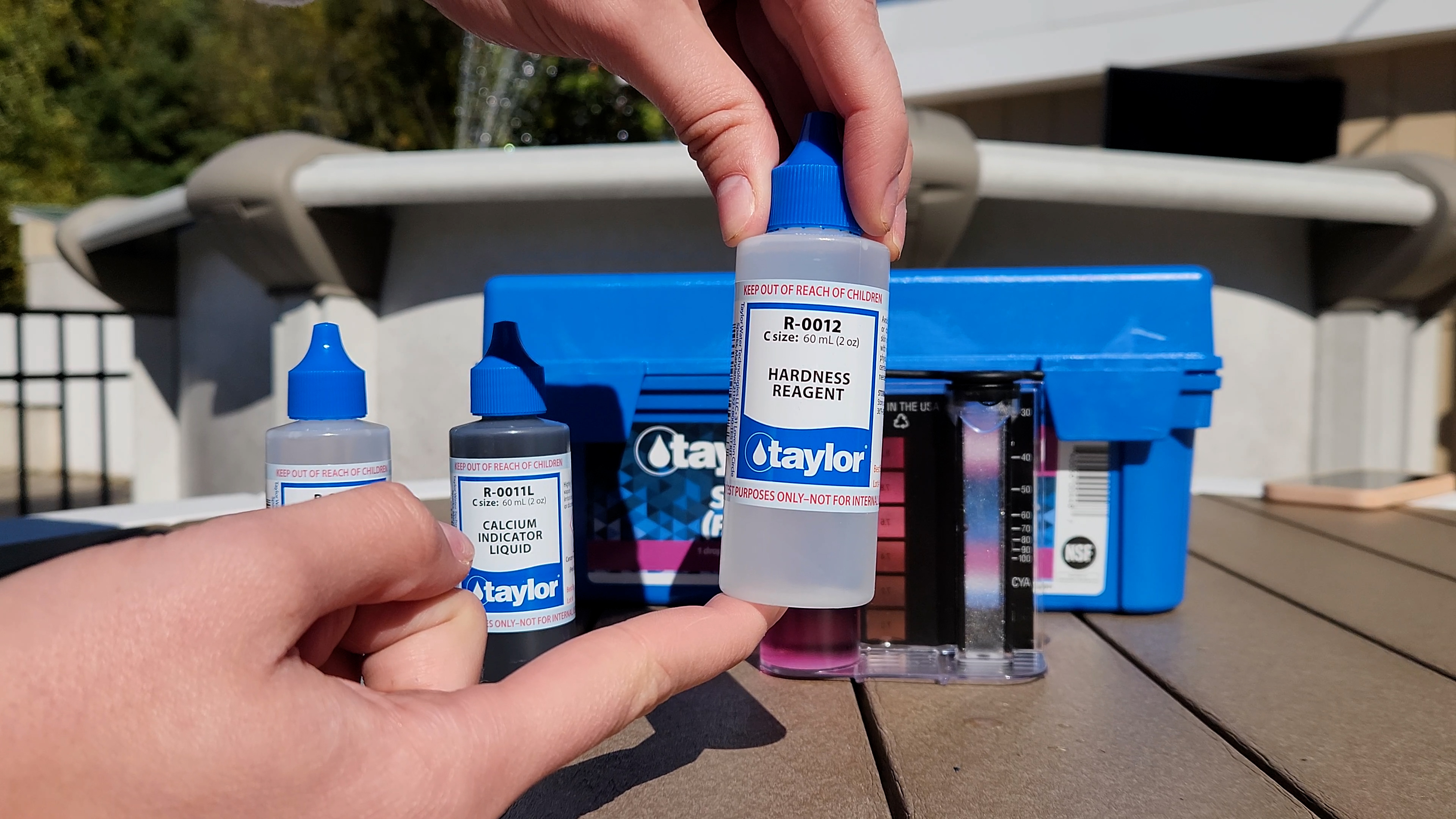
- Swirl until color changes from red to blue
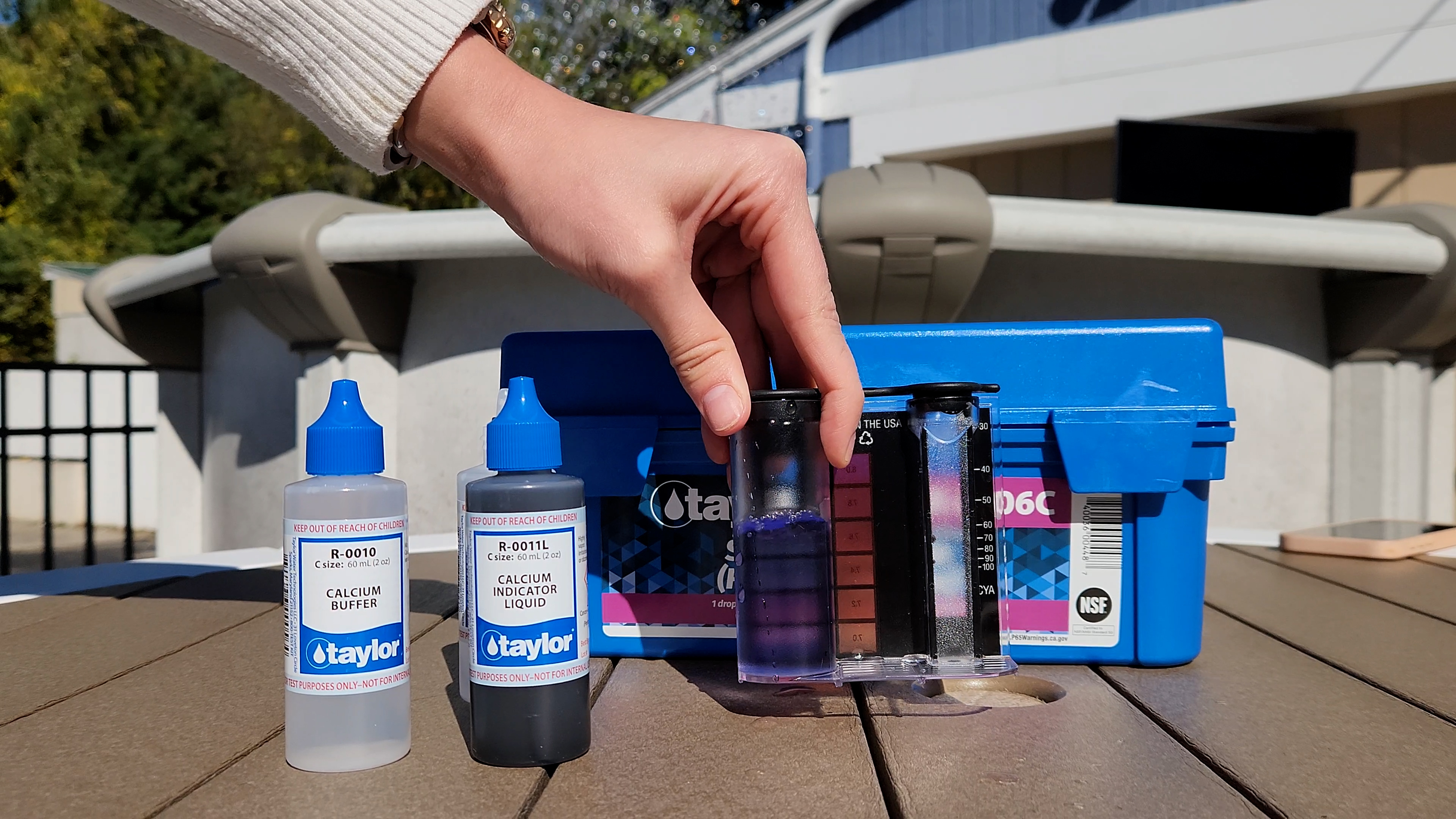
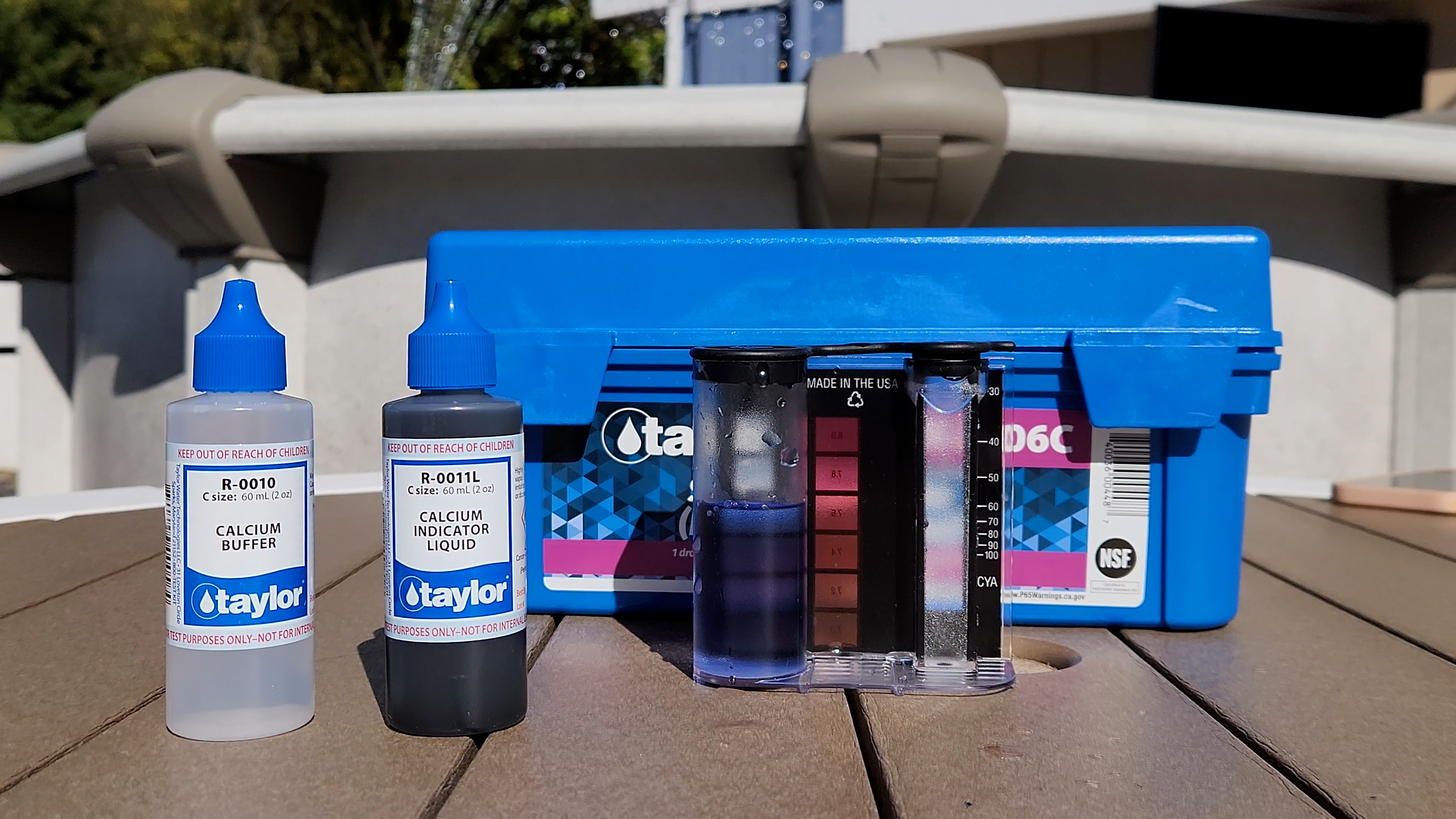
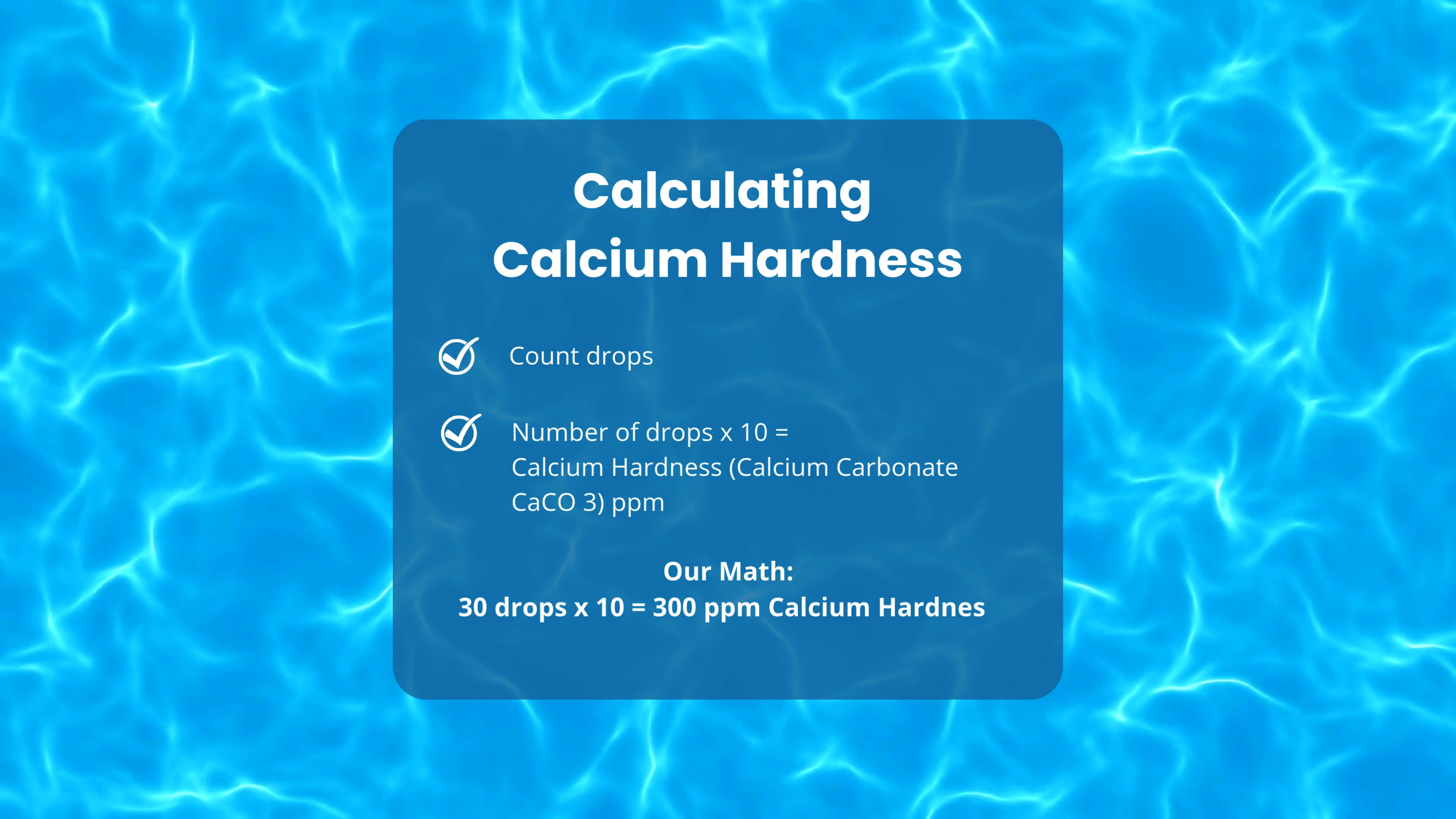
- Count drops × 10 = Calcium Hardness (ppm)
Example:
30 drops × 10 = 300 ppm Calcium Hardness
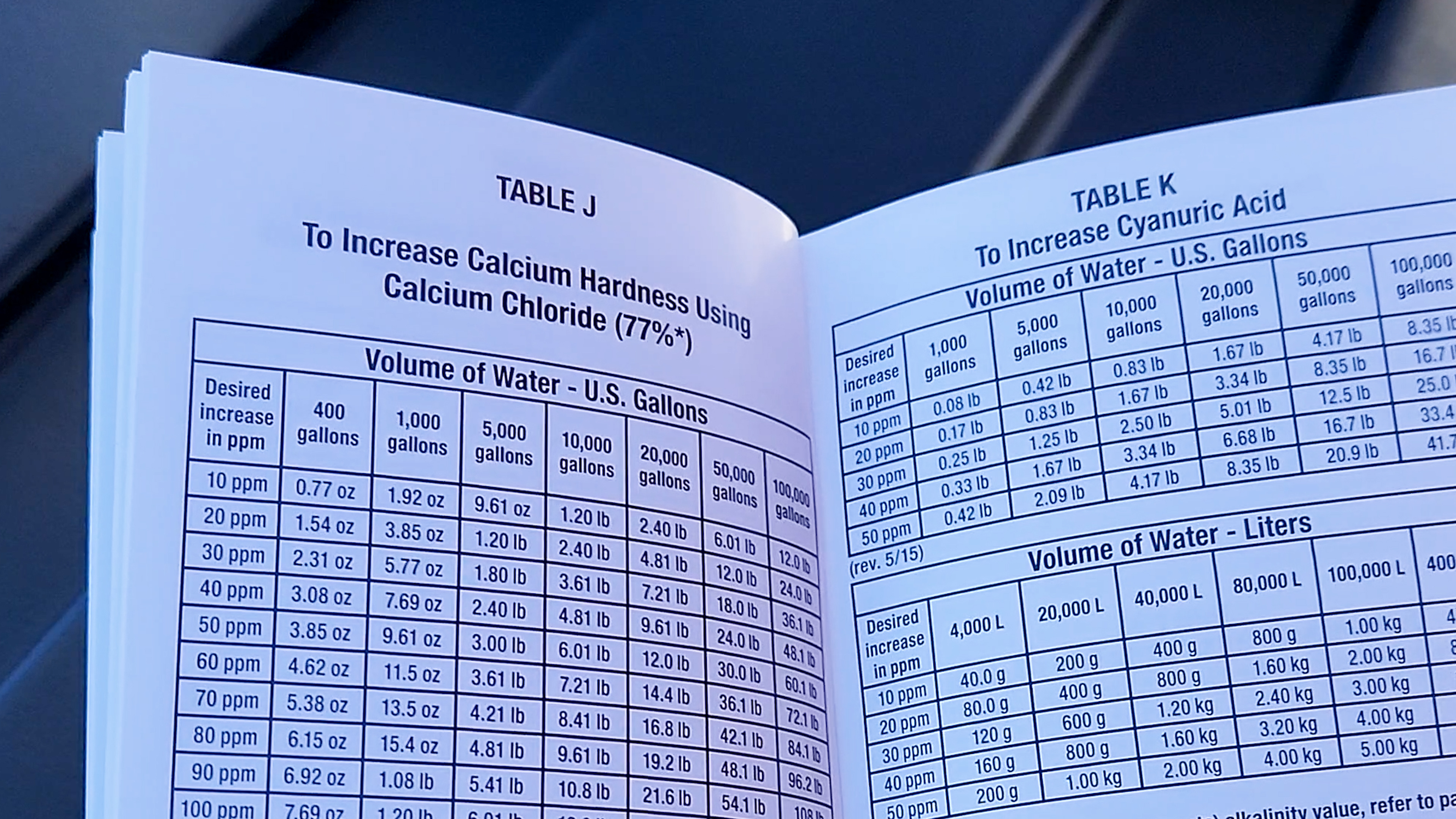
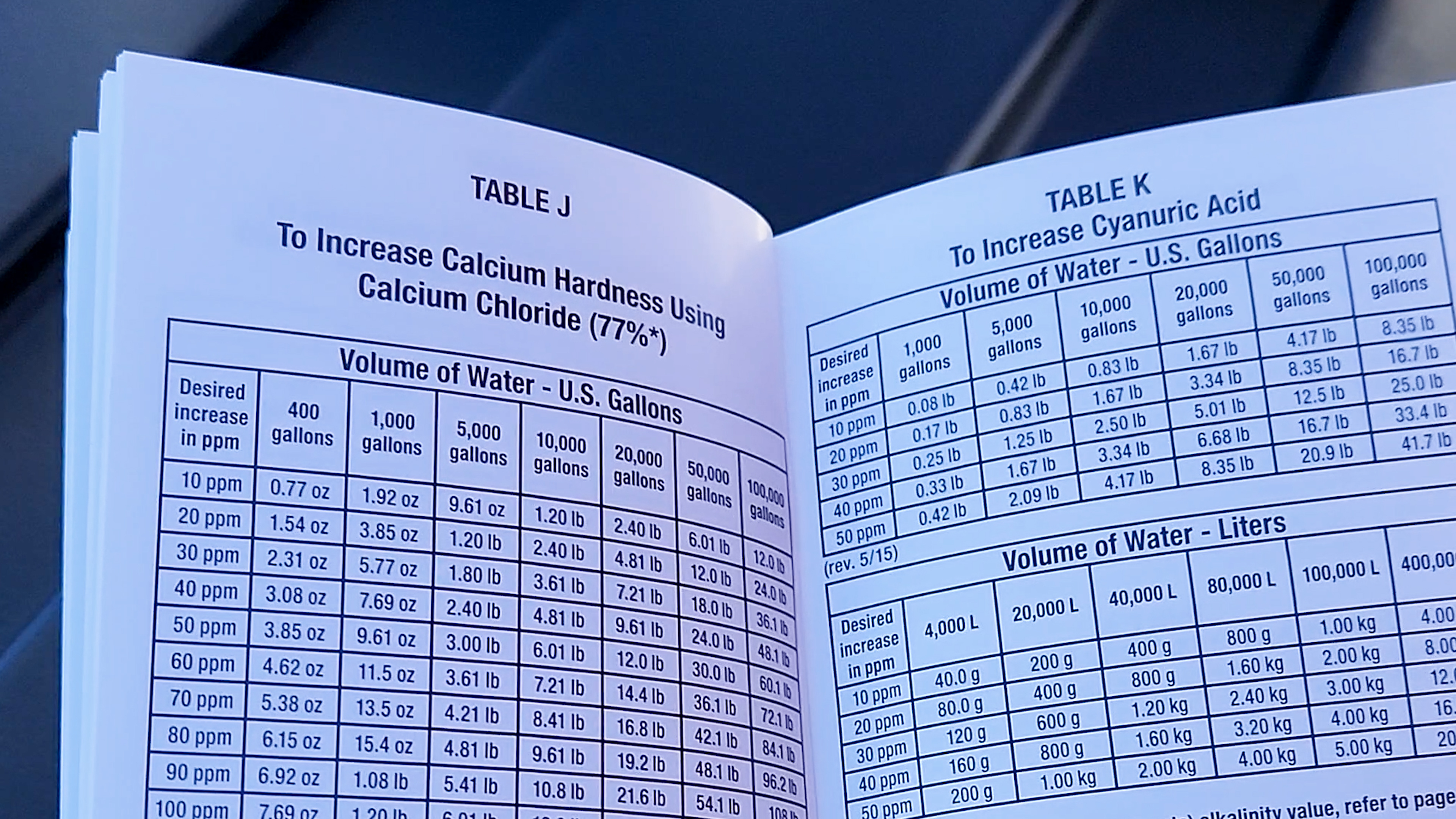
Refer to Tables J and K for interpretation and treatment.
Cyanuric Acid (Stabilizer)
Cyanuric Acid protects chlorine from being destroyed by sunlight.
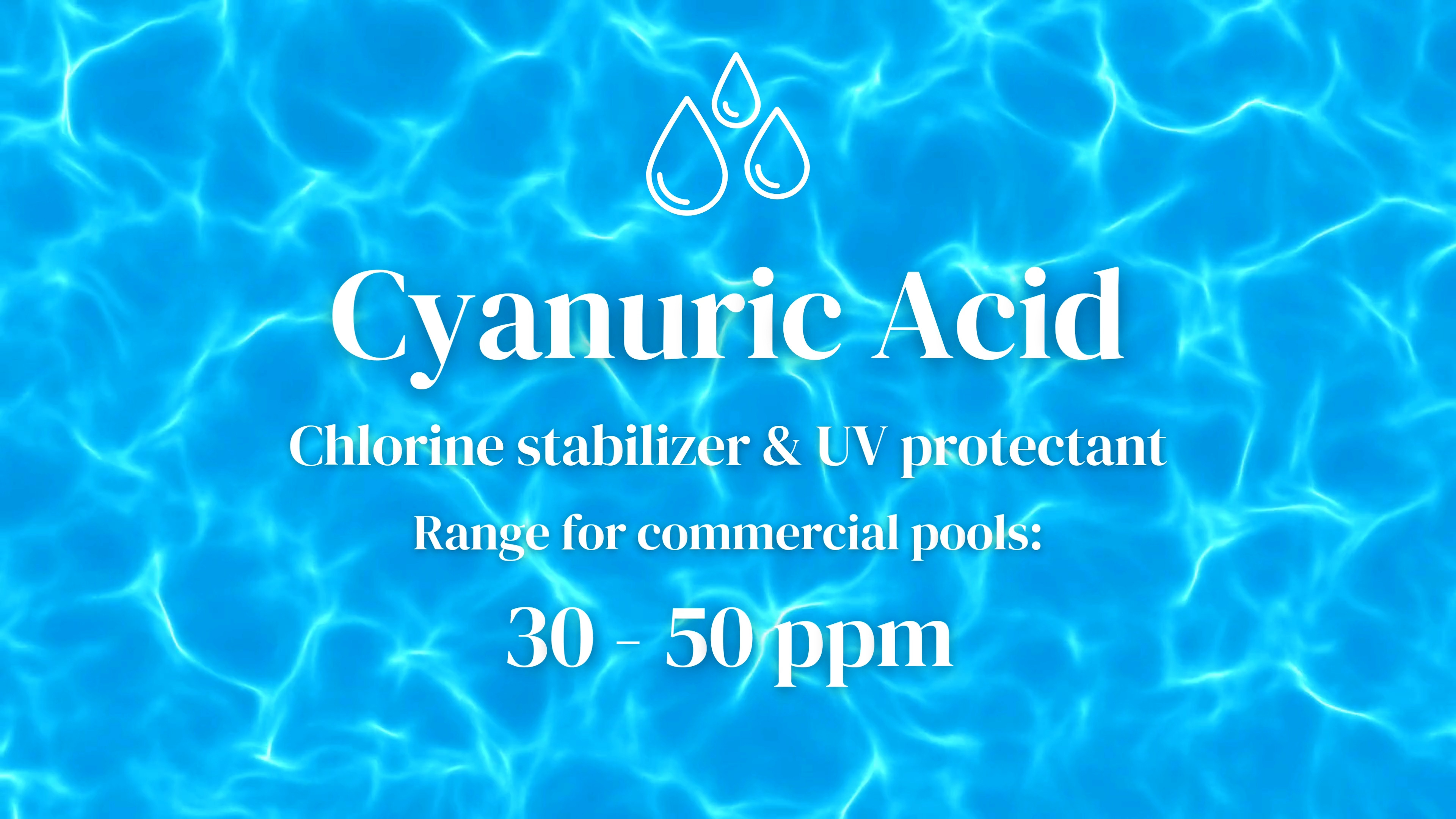
Ideal Cyanuric Acid Range (Outdoor Pools):
30–50 ppm
Too little causes chlorine to burn off quickly; too much reduces chlorine effectiveness.
Reagents used: White caps
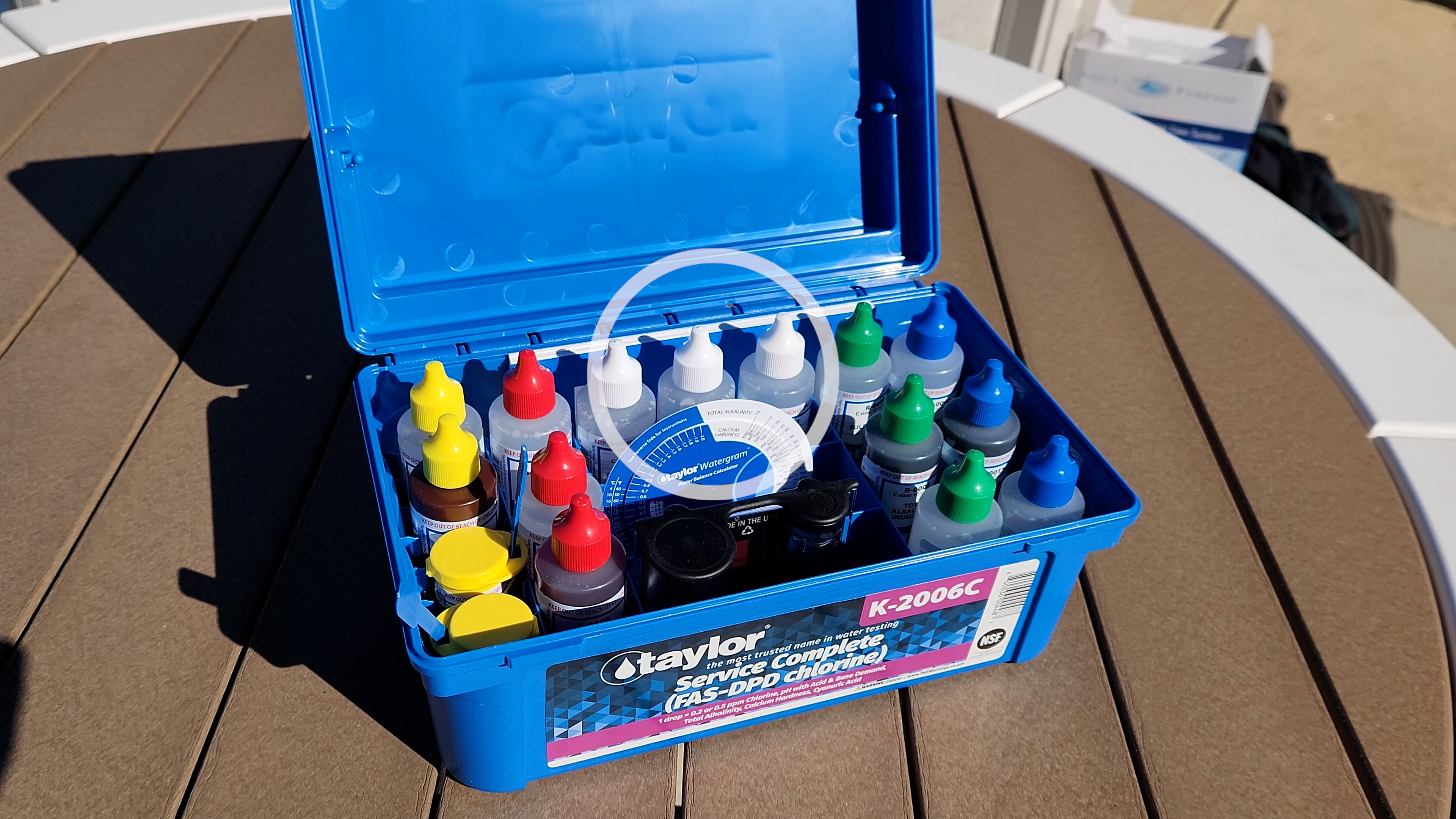
How to Test Cyanuric Acid
- Fill mixing bottle to 7 mL with pool water
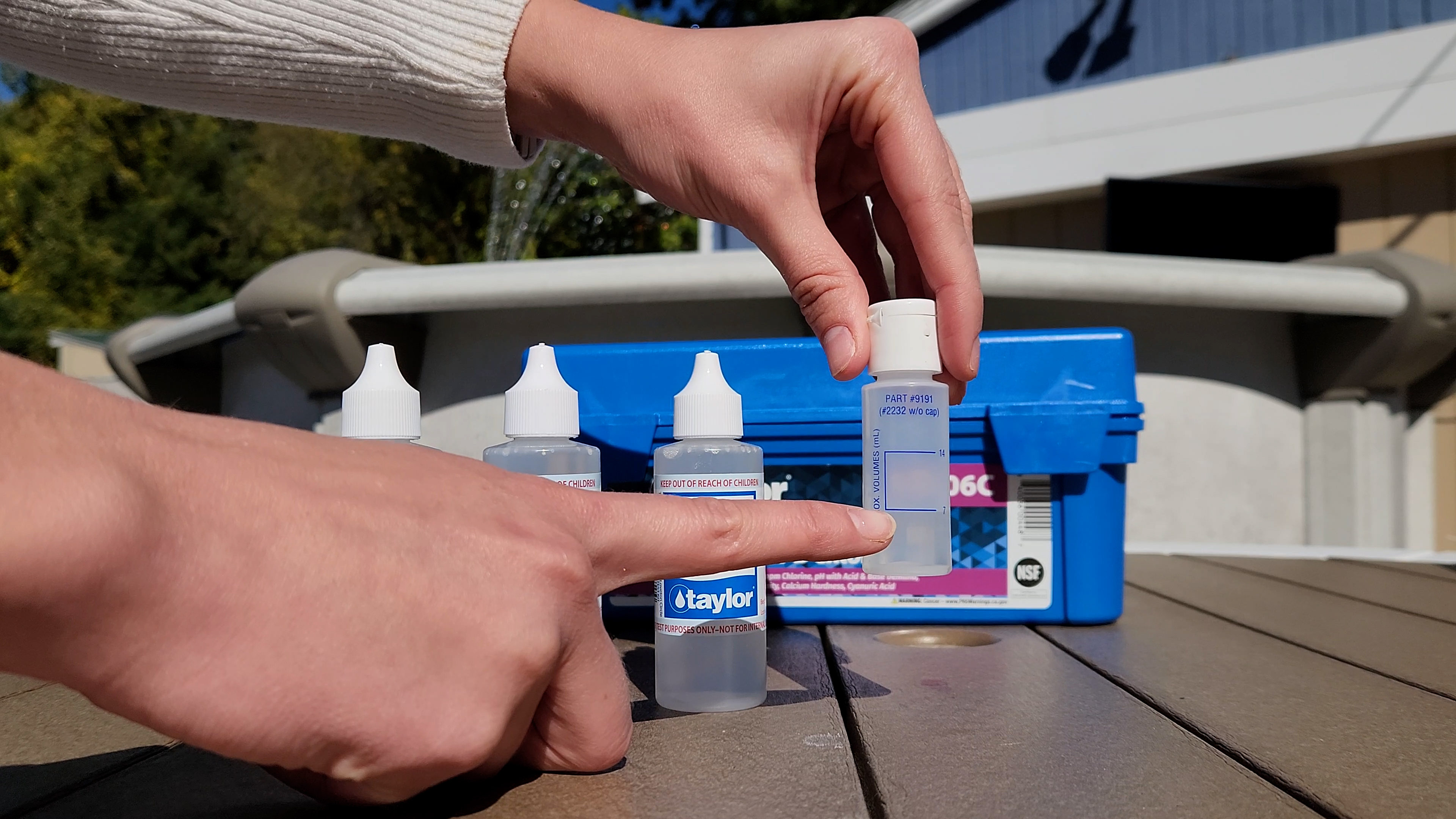
- Add R-0013 to the 14 mL mark
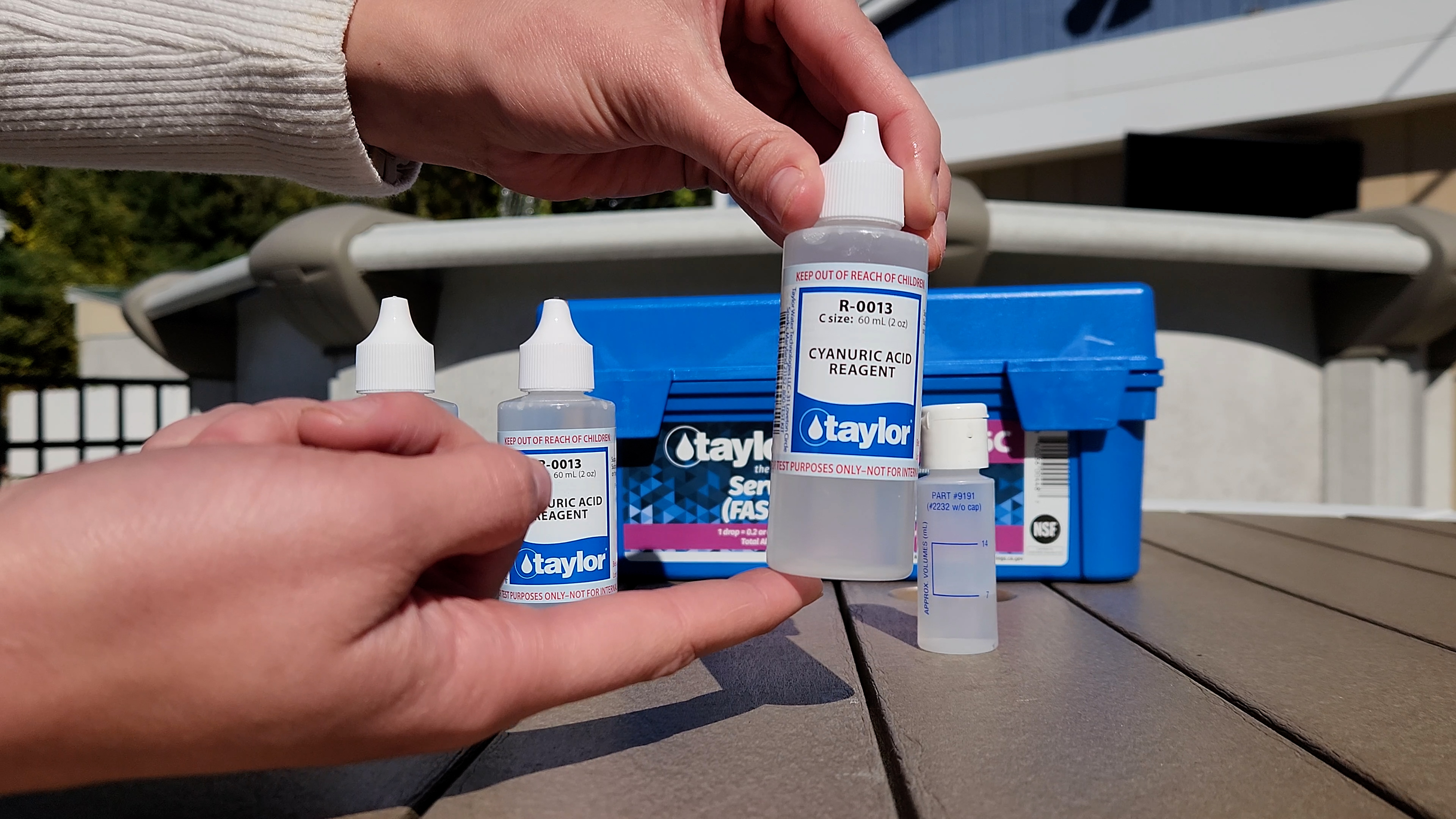
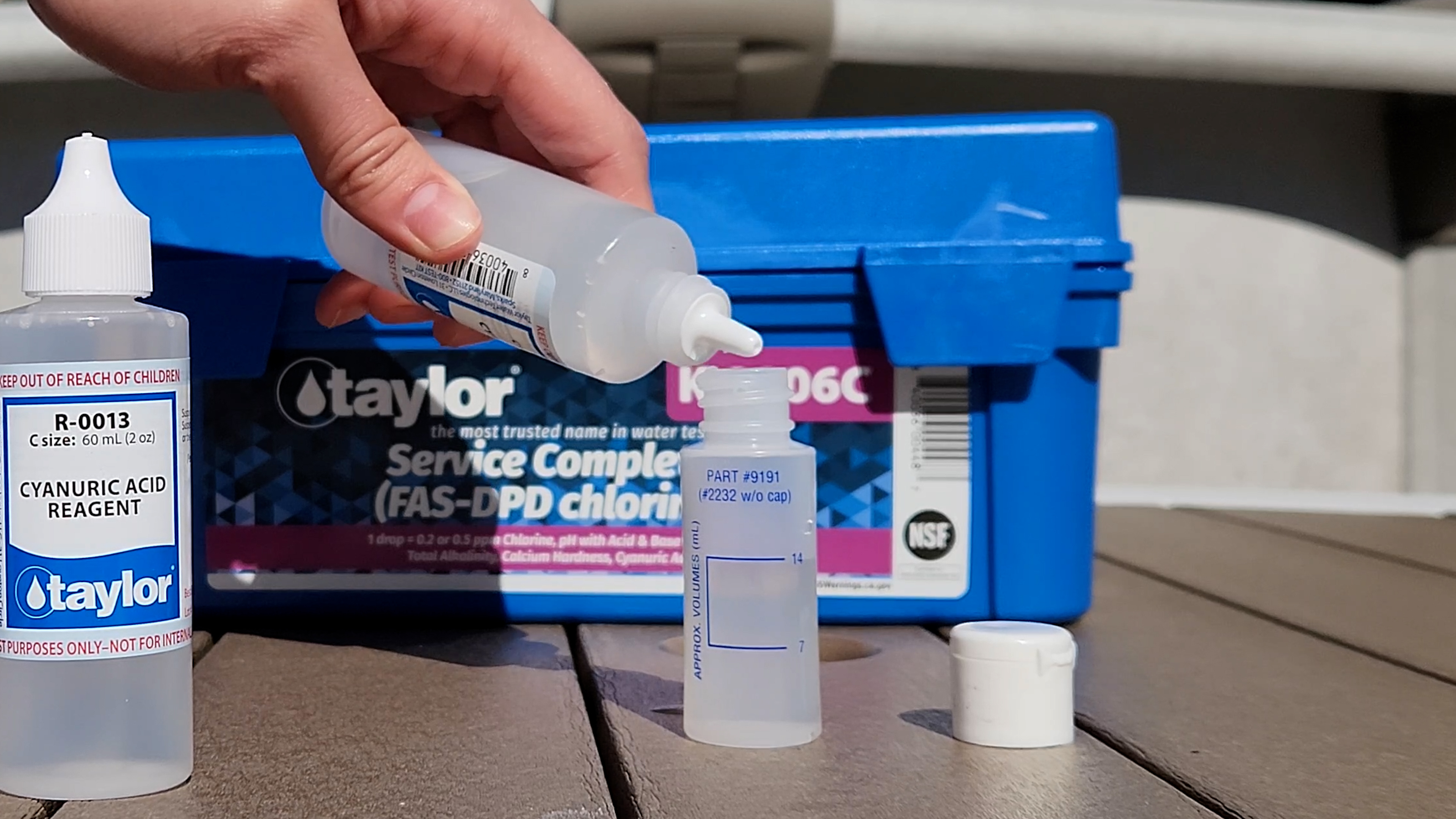
- Cap and mix for 30 seconds
- Slowly pour into the view tube
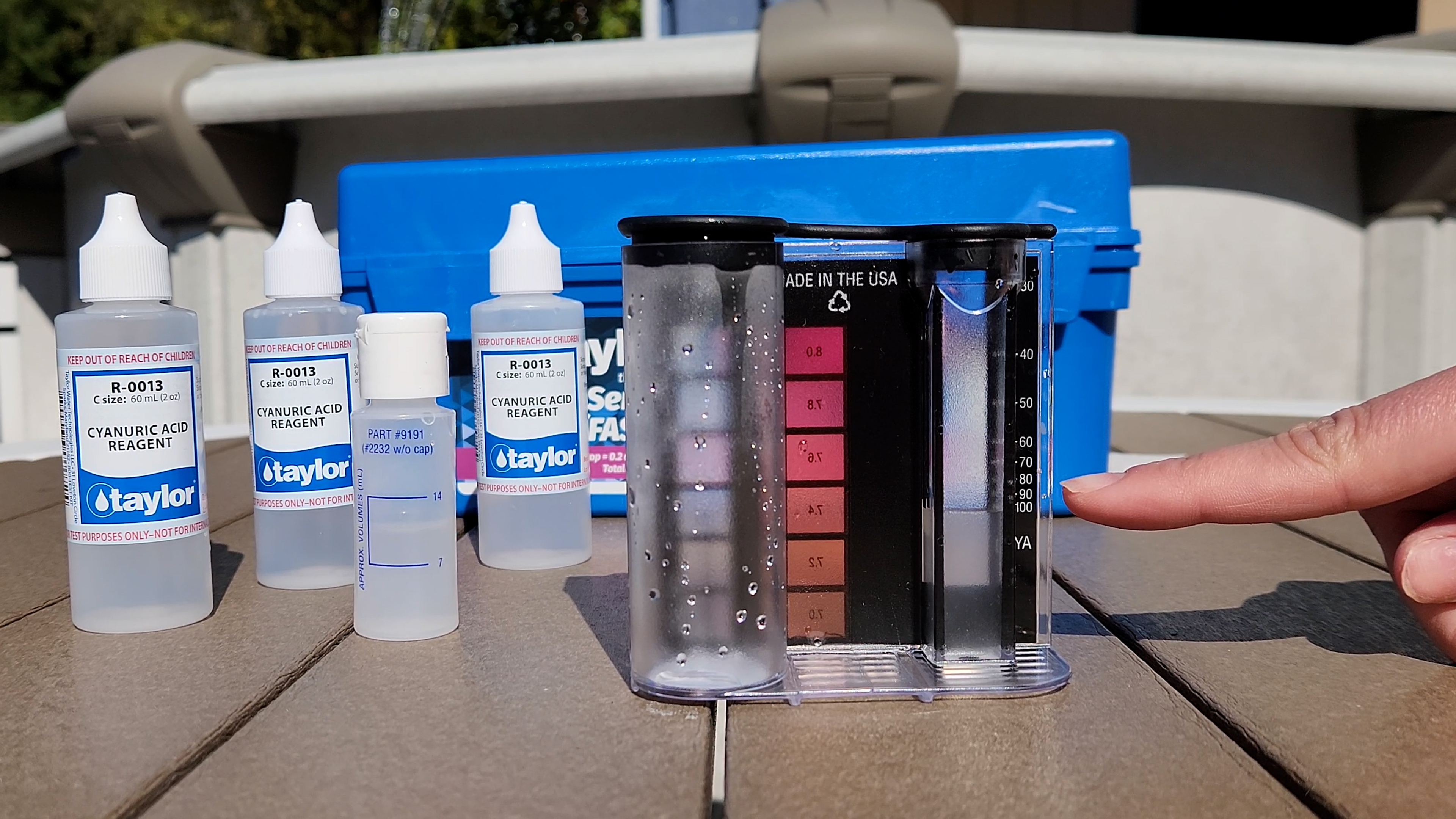
- Look down from the top and stop when the black dot disappears
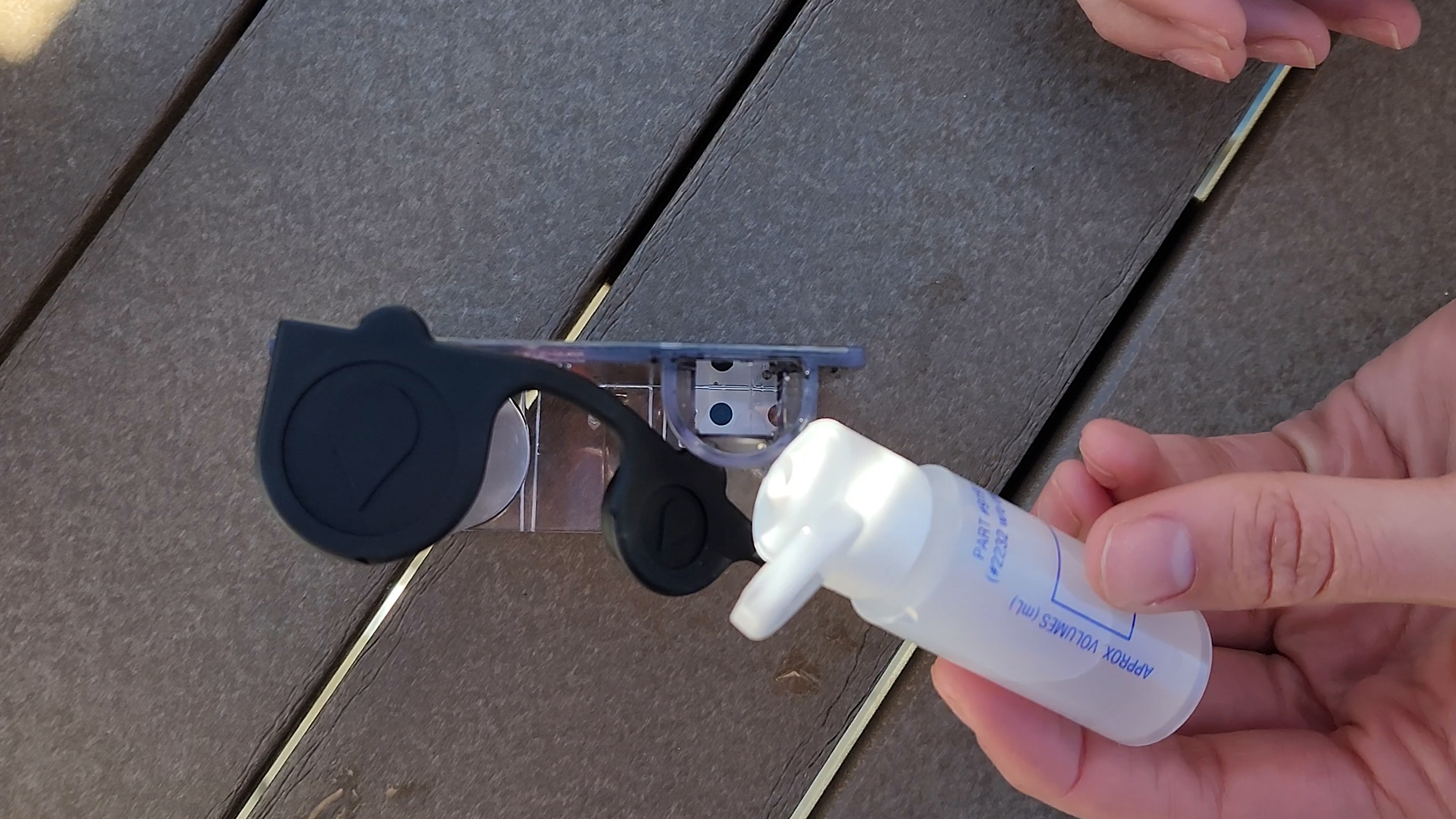
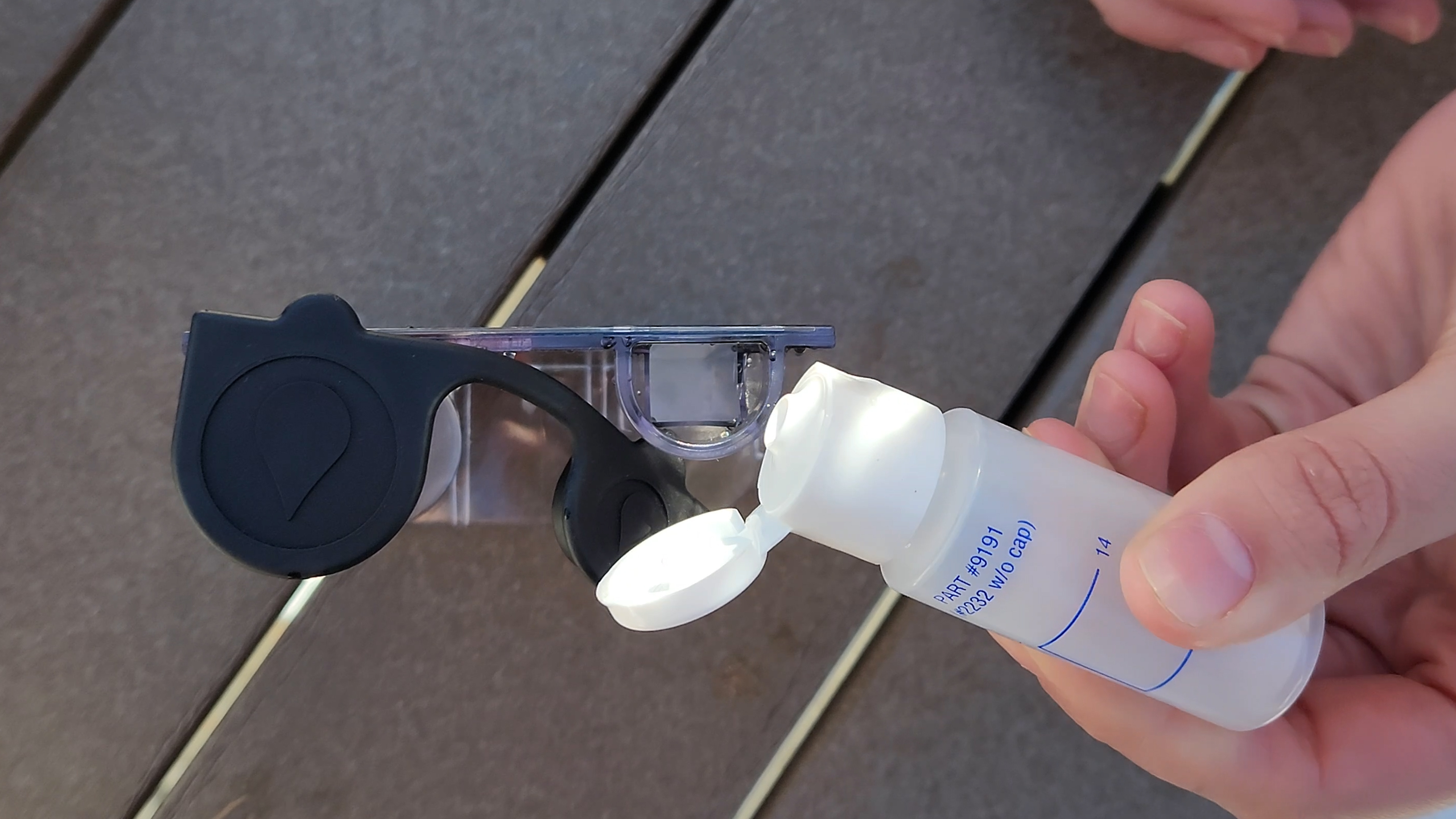
- Read the value on the side of the tube (ppm)
Need More Help? We’re Real People - and We’re Here for You!
Pool water doesn’t always fit perfectly into a chart, and that’s okay.
We’re a small, local business, and helping pool owners is what we do best.
When you reach out to EZ Pool & Spa Supply, you’re talking to real people who work with pools every day - not a call center, not a chatbot, and not a scripted help line.
Need replacement reagents, refills, or a new Taylor Test Kit? We have those too, and we’ll ensure you have exactly what you need (and nothing you don’t).
Reach out anytime - we’re happy to help!